
On this page
- About Asbestos & Asbestos Abatement
- Health Problems of Asbestos
- Learn More About Asbestos Abatement
- What is the difference between asbestos abatement and asbestos remediation?
- When does Missouri require a registered asbestos contractor?
- What does an asbestos abatement project look like, step by step?
- Which materials can contain asbestos in a home or building?
- Can asbestos be encapsulated instead of removed?
- How is asbestos waste packed and disposed of?
- Who handles commercial and industrial asbestos jobs?
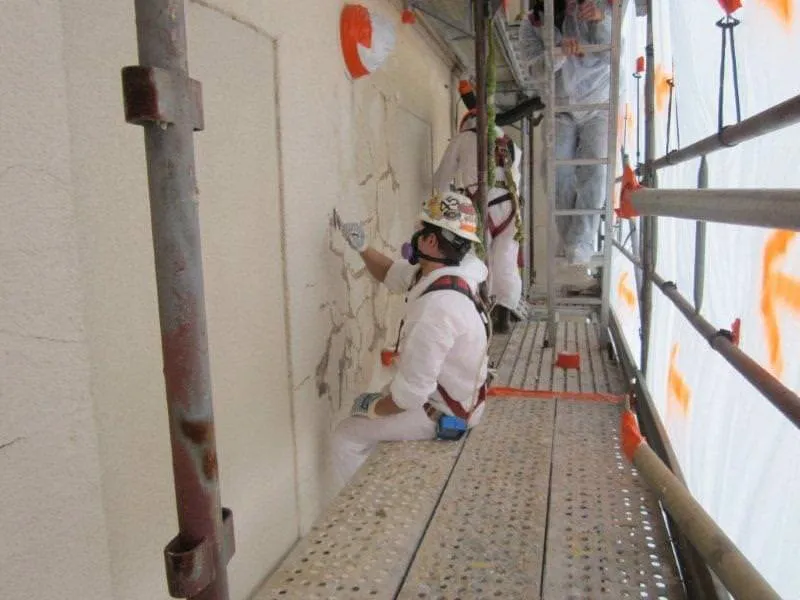
Advanced Environmental Services offers asbestos abatement services for commercial, residential, and industrial buildings. Our asbestos remediation services are available to clients throughout Missouri, including St. Louis, St. Charles, and Columbia. Asbestos abatement removes any dangerous asbestos containing material that is at risk for releasing asbestos fibers into the air. Situations that create a need for asbestos remediation include upcoming renovations or demolition projects. Additionally, if materials are damaged or deteriorating, they may release asbestos fibers. If you require asbestos testing or asbestos abatement services for a residential, commercial, or industrial building, contact Advanced Environmental Services to learn more about how we can help.
About Asbestos & Asbestos Abatement
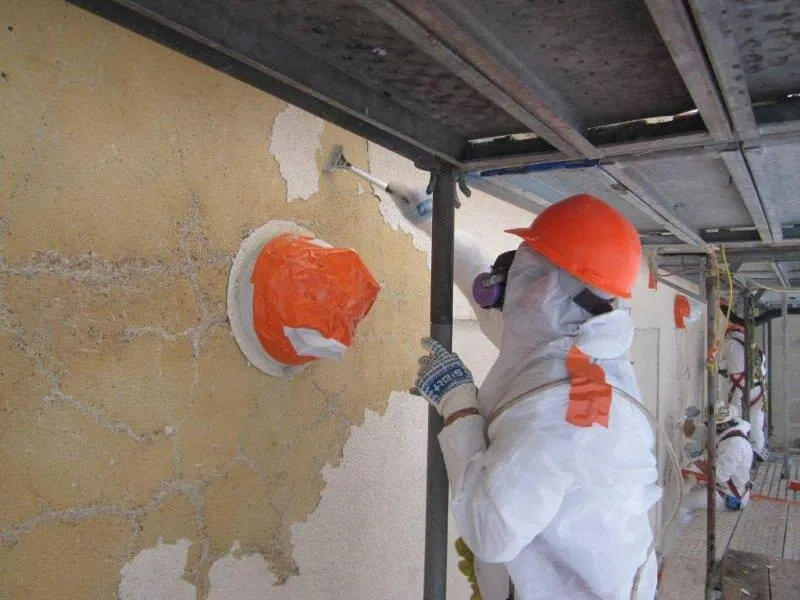
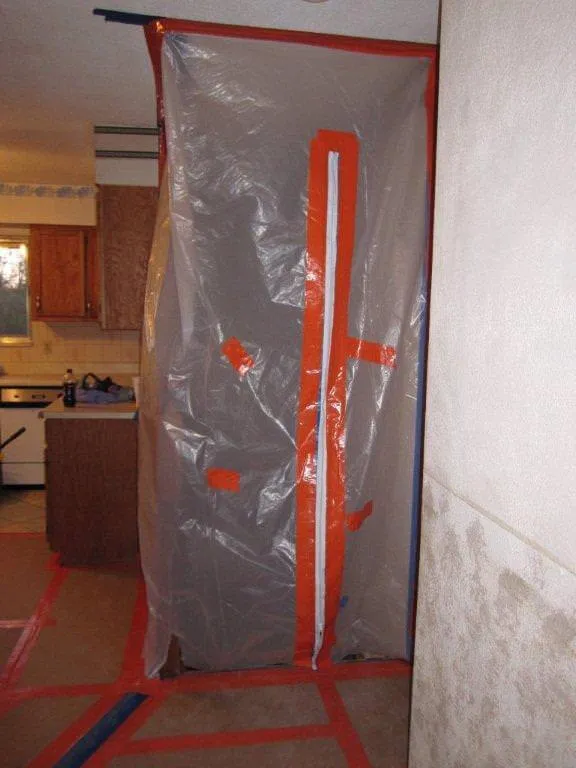
Zip containment used to keep airborne toxins within the work area and from entering the rest of the residence
Asbestos is a term used to describe six naturally occurring fibrous minerals, which can be found in certain types of rock formations. Of these six minerals, chrysotile, amosite, and crocidolite were commonly used in building materials up until the mid 1980’s because of their fire proofing, corrosion resistance, and insulation properties. It is now understood, that asbestos fibers, when present in the air, can cause a number of dangerous medical complications. Because of this risk, asbestos abatement is a common practice in all types of buildings including schools, homes, commercial buildings, office buildings, and industrial buildings. Asbestos remediation or abatement is needed whenever there is a chance of disturbing materials containing asbestos fibers including prior to renovations or demolition.
At Advanced Environmental Services, we offer a complete range of asbestos abatement services. Whether you require asbestos remediation for a safe renovation project or asbestos abatement and demolition services, we can help. Our asbestos abatement services include commercial asbestos removal, industrial asbestos removal, and residential removal services for customers throughout St. Louis, St. Charles, and Columbia, Missouri. We can safely remove any type of asbestos containing material including asbestos floor tile removal and asbestos ceiling removal.
Health Problems of Asbestos
Asbestos is typically only a problem when a material begins to deteriorate or is disturbed during construction projects. Therefore, in many cases, it is safest to leave asbestos containing materials alone until asbestos abatement is necessary due to deterioration or planned renovations. Asbestos consists of tiny fibers that are typically invisible to the naked eye. These fibers can be inhaled resulting in an increased risk for a number of medical conditions including:
- Lung cancer
- Mesothelioma, a cancer of the lining of the chest or abdominal cavity
- Asbestosis, a buildup of fibrous scar tissue in the lungs
For many individuals, the risk of developing these conditions is higher with longer and greater exposure to asbestos containing materials. However, symptoms can take up to 20 or 30 years to occur following exposure. Because asbestos material that is deteriorating or has been sawed, scraped, or sanded is more likely to become a health hazard, asbestos remediation or abatement is necessary under these circumstances.
Learn More About Asbestos Abatement
If you are concerned that your home or building may require our asbestos abatement or testing services, learn more about common asbestos containing materials in homes and buildings and when you may need asbestos remediation or learn about asbestos removal costs. For a professional inspection and custom asbestos remediation solution for your home or building, contact our environmental remediation company. Learn more about asbestos abatement at the links below:
- Do You Need Asbestos Removal
- Guide to Safe Asbestos Removal
- Learn About the Dangers of Asbestos
- Asbestos Removal Costs
- Factors that Affect Your Asbestos Removal Price
- When You Need Asbestos Remediation
- A Guide to Understanding Your Asbestos Survey
- Asbestos Removal: Why You Need to Hire the Experts
- Asbestos Disposal Regulations You Need to Understand
- How to Choose the Best Asbestos Removal Contractors
- FAQs from St. Louis Asbestos Removal Companies
- Learn More About Asbestos Floor Tile and Ceiling Removal
Other important asbestos information can be found at the following websites:
What is the difference between asbestos abatement and asbestos remediation?
Abatement means reducing or removing an asbestos hazard. Remediation is a wider word for fixing a contamination problem. On asbestos jobs, people use the two words for the same work: taking out or sealing material that can release fibers. The words matter less than the rules that apply to the job.
Where the words do split, abatement usually points to removal, enclosure or sealing of building materials, and remediation points to the whole cleanup. Our side-by-side page on asbestos abatement vs remediation covers it, and the glossary has a short entry on abatement vs remediation.
Search for either word in St. Louis and you reach the same kind of contractor. What you need to check is not the word on the sign. Check who is registered, who is certified, and whether the contractor pulls the right notices.
When does Missouri require a registered asbestos contractor?
Missouri requires a registered abatement contractor when a survey finds 160 square feet, 260 linear feet or 35 cubic feet or more of regulated asbestos-containing material that demolition or renovation will disturb. Below those sizes the rule may not force a registered contractor, but the material still needs safe handling.
Here is how the main state rules fit together, as of October 2026:
| Rule | What Missouri DNR says | Who it affects |
|---|---|---|
| Size trigger | 160 sq ft, 260 linear ft or 35 cu ft or more of regulated material must be removed by a Missouri registered abatement contractor | Owners planning demolition or renovation |
| Advance notice | Notice at least 10 working days before demolition or abatement of a regulated structure | Owners and contractors |
| Worker certification | Individuals must be certified by the department before taking part in an asbestos project | Every worker, inspector and supervisor |
| Residential exemption | Most single-family residences are exempt from the notification rule | Single-family homeowners |
Source for the table: Missouri DNR asbestos page and publication PUB2554 (links under the page’s sources). These rules change. Check the Missouri DNR asbestos page before you set a schedule.
The size triggers use the term regulated asbestos-containing material. The notice rule comes from the federal NESHAP program. Our post on Missouri’s 10 working day asbestos notice walks through the timing, and the guide on Missouri demolition and renovation asbestos rules covers the full set.
What does an asbestos abatement project look like, step by step?
A regulated abatement project runs in a fixed order: survey, notice, setup, removal, cleanup, air test and disposal. Each step protects the people in and around the building. The steps below describe a typical project. Your scope may add or drop steps depending on the material.
- Survey. A certified inspector samples suspect materials and a lab confirms what is asbestos. See the glossary entry on an asbestos survey and our asbestos survey and asbestos testing pages.
- Notice and planning. For a regulated structure, the owner or contractor files the state notice at least 10 working days ahead. The inspection report goes with it.
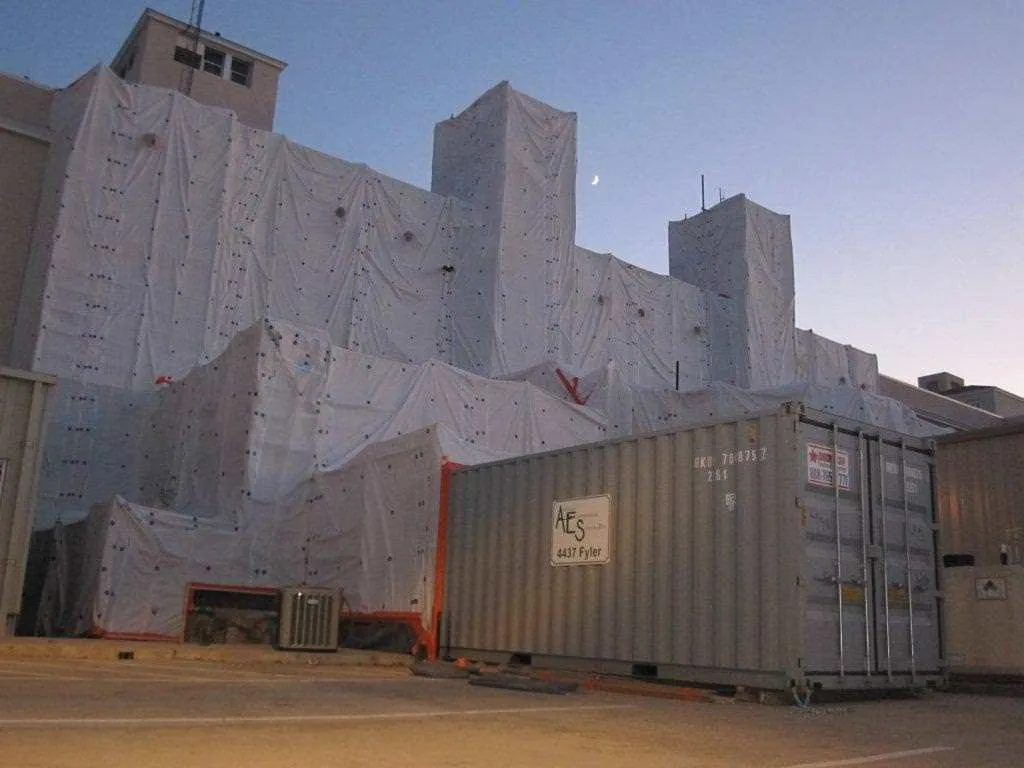
- Containment. The crew seals the work area with plastic sheeting so fibers stay inside. AES says it uses industrial plastic sheets to seal off the contaminated area. Read more on containment.
- Negative air. A negative air machine pulls air out of the work area through a HEPA filter. Air leaks inward, not outward.
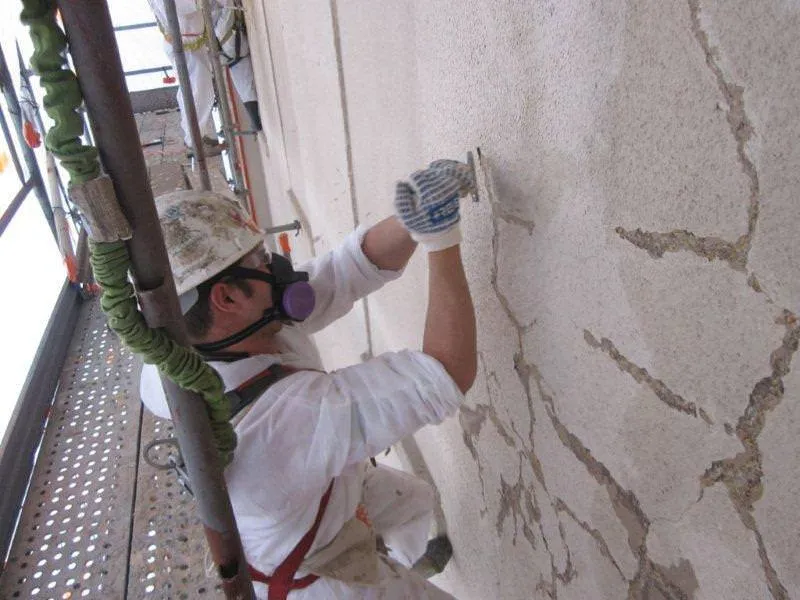
- Removal. Certified workers in protective gear wet and remove the material and bag it.
- Cleanup. The crew cleans surfaces and removes the containment.
- Air test. Air sampling checks that the area is clean. The glossary explains the clearance air test.
- Disposal. Bagged waste goes to an approved site. See asbestos disposal.
AES says it keeps hazardous material inside a defined work area whenever possible so you can often stay partly in the building during the work. Ask any contractor which parts of your building they can keep in use.
Which materials can contain asbestos in a home or building?
Many building materials made before the mid 1980s can contain asbestos. AES lists exterior walls, window putty, shingles, roofing felts, floor coverings, insulation, interior walls, ceilings and electrical equipment as places to find it. You cannot tell by looking. Only a lab test confirms it.
Materials fall into two groups, and the group decides how risky they are to disturb:
| Material | Typical form | Group | Page for more |
|---|---|---|---|
| Floor tile and mastic | Hard tile, black adhesive | Non-friable until cut or broken | Asbestos floor tile |
| Siding and shingles | Cement-board sheets | Non-friable until cut or broken | Asbestos siding removal |
| Pipe and boiler insulation | Wrap, block | Can be friable when damaged | Asbestos removal |
| Tank insulation | Wrap on industrial tanks | Can be friable when damaged | Asbestos tank removal |
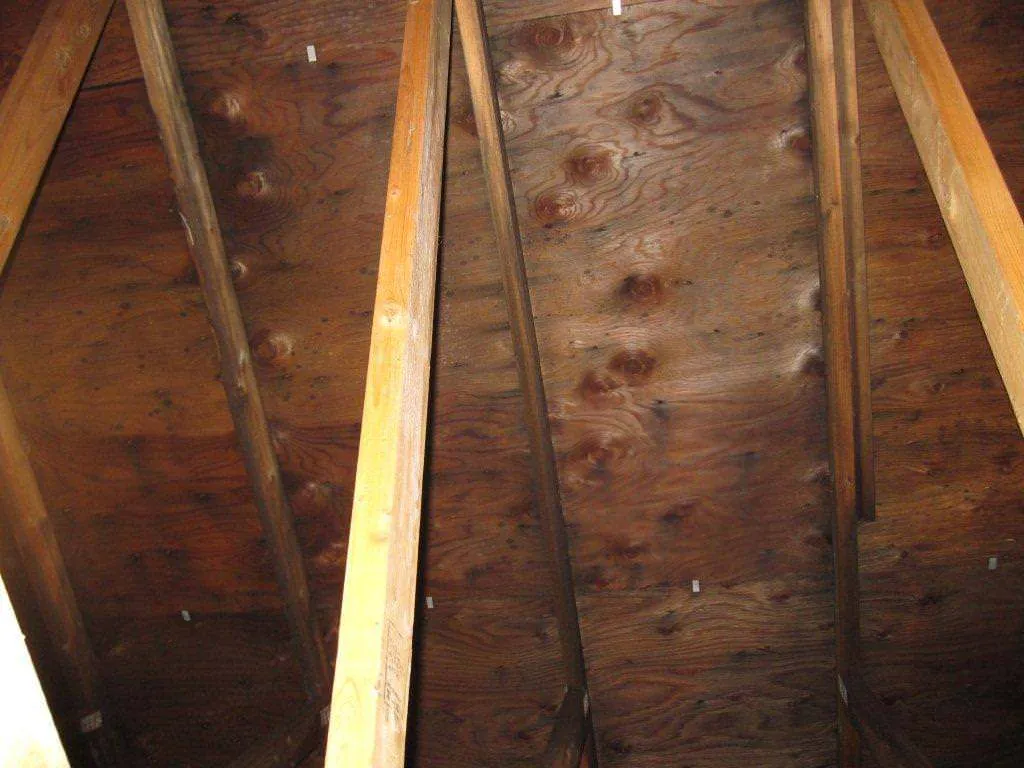
| Attic insulation | Loose fill | Treat as hazardous until tested | Dangers of asbestos |
Friable material crumbles by hand and puts fibers in the air with little effort. Non-friable material stays bound until someone saws, sands or breaks it.
The US EPA gives one rule that applies to all of it: “Asbestos fibers must be airborne to cause a health risk through inhalation, so the first step is not to disturb the material, which would release more fibers into the air.” If material is intact and you plan no work, leaving it alone is often the safest plan. AES says the same on this page.
Older homes carry more risk. Our guide on asbestos in older St. Louis homes explains which parts of a house to check and what a survey tells you.
Can asbestos be encapsulated instead of removed?
Yes. Encapsulation seals asbestos material with a coating so fibers stay in place. AES says it takes less time than abatement and suits damaged or exposed asbestos edges. The material stays in the building, though, and AES notes it “may pose a problem in the future as the material ages and degrades.”
Choose by condition and plans:
| Question | Points toward encapsulation | Points toward removal |
|---|---|---|
| Is the material in good shape? | Yes, mostly intact | No, crumbling or water damaged |
| Will you renovate or demolish? | No work planned on it | Yes, work will disturb it |
| Can the surface take a coating? | Yes | No |
| Do you want the hazard gone for good? | Not a priority | Yes |
A coating is not a fix if you plan to cut into the material later. Demolition and renovation usually force removal. Learn more on our asbestos encapsulation page, in the glossary entry on encapsulation, and in the side-by-side asbestos encapsulation vs removal.
How is asbestos waste packed and disposed of?
Abatement contractors must dispose of asbestos waste safely. Missouri DNR says registered abatement contractors “are trained in the proper procedures for safely removing and disposing of asbestos-containing material.” It does not belong in household trash, and the contractor must handle it under the rules.
Disposal is one reason DIY removal goes wrong. A homeowner has no way to lawfully move and dump the waste. Our asbestos disposal page explains the regulations in more detail. Ask any contractor you hire to tell you where your waste will go and to keep the paperwork.
Who handles commercial and industrial asbestos jobs?
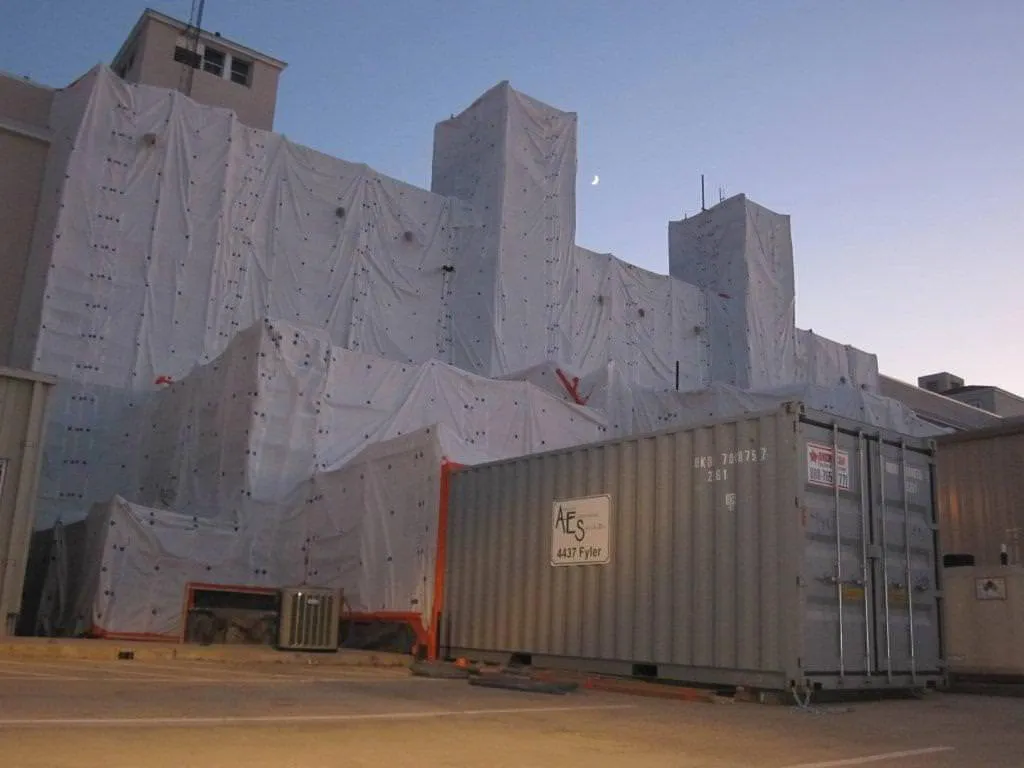
AES handles asbestos abatement in commercial, industrial and residential buildings across St. Louis, St. Charles, Missouri and Columbia, Missouri. Commercial and industrial work often involves larger areas, tighter schedules and regulated structures, which means the state notice and registered contractor rules apply more often than they do for a single-family home.
For larger sites, owners usually need three things lined up early: a survey, a notice and a schedule that fits the building’s use. Property managers, facility directors and general contractors should read our pages on commercial asbestos removal and industrial asbestos removal. If a tank or process line holds asbestos insulation, see asbestos tank removal.
If you are planning a teardown, the asbestos survey comes before the demolition permit. Our demolition page and the guide on demolition from survey to debris show how the two jobs connect.
What does asbestos removal cost, and what changes the price?
AES does not publish a price for asbestos work. Each job depends on how much material there is, what it is, how hard it is to reach and how it must be disposed of. AES quotes each project after an inspection. Beware of anyone who names a price without seeing the material.
Factors that move the price:
- Amount and type of material. Floor tile costs less to handle than loose pipe insulation.
- Access. Attics, crawl spaces and tight mechanical rooms slow the crew.
- Containment needs. Bigger or more complex work areas need more setup.
- Disposal. Bags, haul and landfill fees add up on large jobs.
- Schedule. Work around occupied space or a demolition date takes planning.
Our pages on asbestos removal costs and the factors that affect your asbestos removal price go through each one, and the guide on asbestos removal cost puts them side by side.
How do I pick an asbestos contractor in Missouri?
Pick a contractor that Missouri DNR lists as registered, that uses certified workers, and that quotes in writing after seeing the material. You can check the state list yourself in a few minutes. A low phone price with no inspection is a warning sign.
A short checklist:
- Search the Missouri DNR asbestos contractor list for the company name. Check the status and expiration date.
- Ask who will supervise and whether those people hold state certification.
- Ask to see the survey or inspection report that sets the scope.
- Ask who files the state notice and when.
- Ask where the waste will go.
- Get a written estimate that names the materials and the areas.
As of October 30, 2026, the DNR list shows Advanced Environmental Services, Inc., 3100 Gravois Avenue, St. Louis, registration 27-06-0640, status Active, expiring 2027-06-30. AES also says Mr. Ruckman is trained and certified as an Asbestos Inspector & Supervisor, and that it has never had a citation from the EPA or OSHA.
More help is on our pages for choosing asbestos removal contractors and asbestos removal companies, and in the guide on hiring an asbestos contractor in Missouri. If your project is in the City, read the post on St. Louis City asbestos abatement permits too.
Next step
Ask AES to look at the material before you plan the job. Call (314) 865-2662 or use the quote form at /contact, and see the asbestos removal page for how the work runs.
Frequently asked questions
Can I remove asbestos from my own home in Missouri?
Do not do it yourself. Sanding, scraping or breaking asbestos material releases fibers into the air. Missouri DNR says most single-family residences are exempt from its notification rule, but that does not make DIY removal safe. A trained, certified crew uses containment, HEPA filtration and disposal rules to keep fibers out of your living space.
Does a single-family house need a DNR notice?
Usually not for the state notice. Missouri DNR says most single-family residences are exempt. Apartment buildings, commercial buildings and other regulated structures are not. Rules can change and local agencies may add steps, so confirm your project with AES or the agency before work starts.
How long before the job do I have to notify the state?
At least 10 working days before demolition or abatement of a regulated structure, according to Missouri DNR. Plan your schedule around that. The notice also needs an inspection report, so book the survey first and the abatement second.
What is the difference between asbestos abatement and asbestos remediation?
Abatement means reducing or removing the asbestos hazard, usually by removal, enclosure or sealing. Remediation is a wider word for fixing a contamination problem. On asbestos jobs the two terms often mean the same work, and AES uses both on this page.
Is encapsulation cheaper than removal?
AES says encapsulation is less time-consuming than abatement. It covers the asbestos with a protective coating, which suits damaged or exposed edges. The asbestos stays in the building and may become a problem as the material ages. Price depends on the material and the area, so AES quotes each job.
Who inspects a building before asbestos work?
A certified asbestos inspector takes samples of suspect materials and sends them to a lab. AES says it has AHERA certified building inspectors. The inspection report tells you what the material is, where it sits and how much there is, which decides the size of the job.
How do I check that an asbestos contractor is registered in Missouri?
Look the company up on the Missouri DNR asbestos contractor list. It shows the registration number, expiration date and status. AES appears on that list as Advanced Environmental Services, Inc., registration 27-06-0640, status Active, expiring 2027-06-30 when we checked on October 30, 2026.
Terms on this page
Sources
- Missouri DNR: Asbestos
- Missouri DNR: Asbestos
- Missouri DNR: Asbestos
- Missouri DNR: Asbestos publication PUB2554
- Missouri DNR: Asbestos publication PUB2554
- Missouri DNR: Asbestos contractor registrations
- US EPA: Protect Your Family from Asbestos-Contaminated Vermiculite Insulation
Checked against the sources above on October 30, 2026. Rules change, so check the linked page before you act.