On this page
- Advantages of Epoxy Flooring
- Epoxy Floor Coating Uses
- Choosing Professional Epoxy Flooring Installation
- Epoxy Flooring: Learn More
- What is an epoxy floor coating, and where does it fit best?
- What systems does AES install?
- Why does surface prep decide how long an epoxy floor lasts?
- When does a slab need a moisture barrier?
- Epoxy or polished concrete: which fits my space?
- How long does installation take, and when can the floor be used?
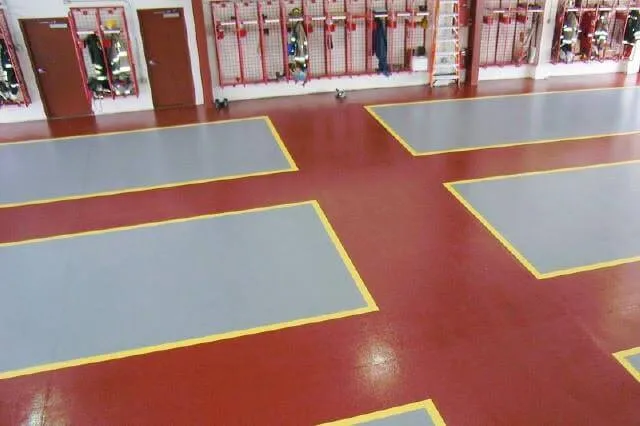
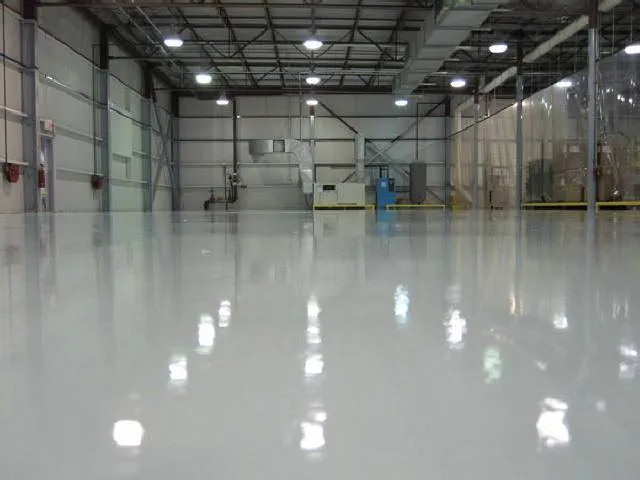
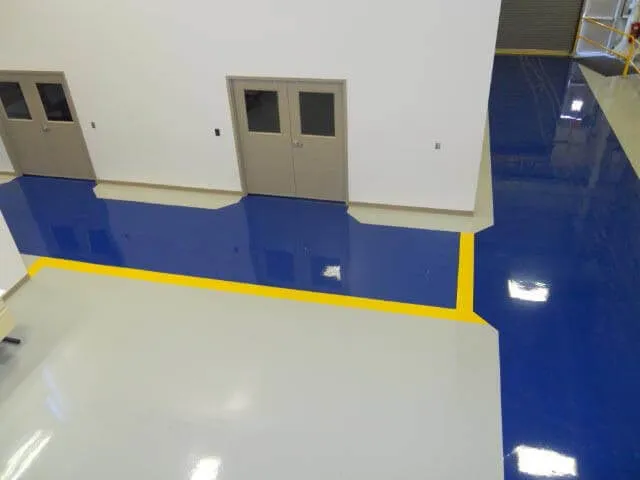
Advanced Environmental Services offers epoxy floor coating installation and application using a trusted epoxy flooring product. This durable epoxy flooring is an ideal coating for use over concrete floors in commercial and industrial buildings including in manufacturing plants or warehouses. This epoxy flooring, installed by our experienced professionals, offers a high gloss, hard wearing, and durable surface. If you are looking for a company to provide quick and convenient epoxy floor coating installation, contact Advanced Environmental Services today to learn more about this durable, self-leveling epoxy flooring. Learn more about Epoxy Flooring.
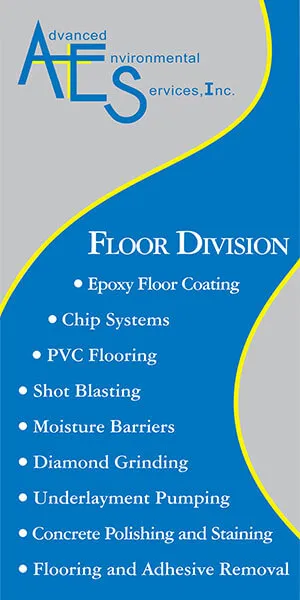 Download Epoxy Flooring Brochure
Advantages of Epoxy Flooring
The epoxy floor coating, which is available for professional application from Advanced Environmental Services, offers a high-gloss, durable surface coating for concrete floors. This epoxy flooring offers a number of advantages including:
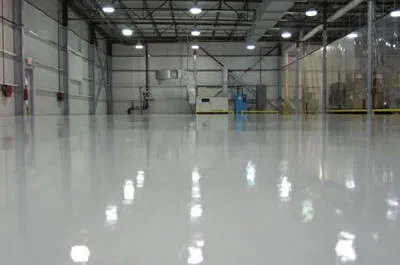
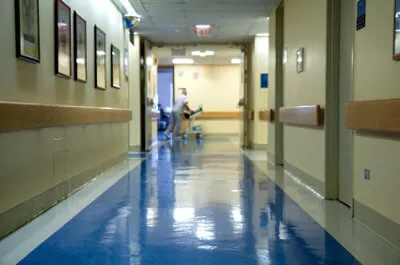

- Varied film thickness: Because our epoxy flooring can be applied with a variety of thicknesses, it can be used for a variety of applications making it extremely versatile.
- Chemically resistant surface: Once installed, this epoxy flooring is durable and chemically resistant making an ideal concrete floor coating for use in manufacturing and industrial plants.
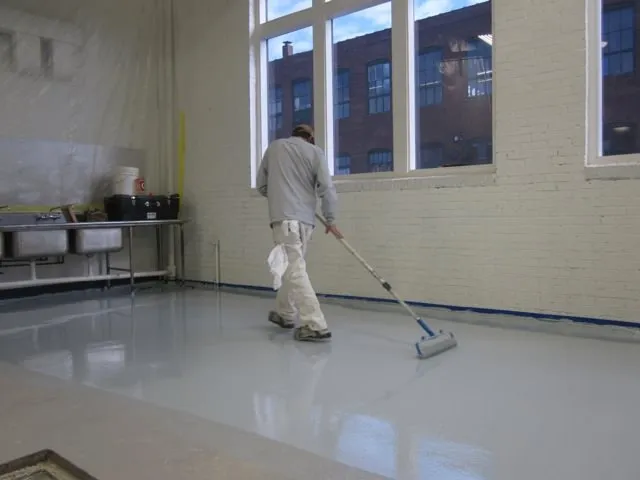
- Self-leveling: This epoxy floor coating is self-leveling, making it quick and easy for our team to install over new or old concrete floors.
- Hard wearing, durable surface: Epoxy flooring creates a high performance surface over concrete floors, which is seamless, durable, and attractive. Therefore, after our professional epoxy flooring application, you will have a durable floor for years to come.
- Environmentally friendly flooring: Epoxy flooring is an environmentally friendly flooring solution for commercial and industrial buildings that makes “going GREEN” affordable and easy.
- Easy to clean nonporous, seamless surface: Epoxy flooring turns permeable concrete floors into a high-gloss, durable surface that can easily be wiped free of dust or debris. Because epoxy flooring results in a nonporous, seam-free surface, it will not trap dirt, making this flooring choice ideal for food preparation and packaging plants as well as for buildings in the pharmaceutical industry.
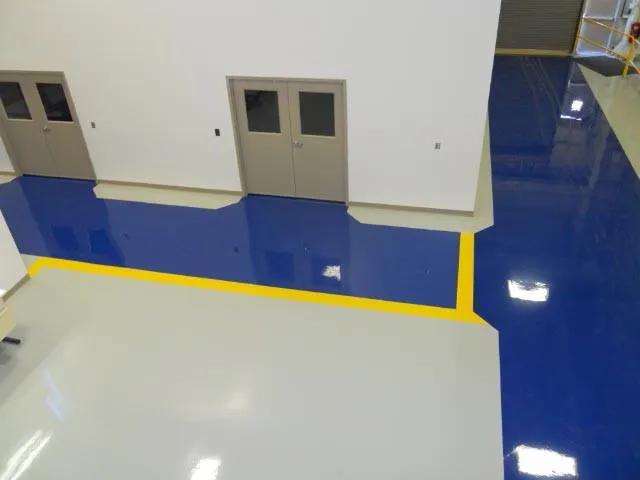
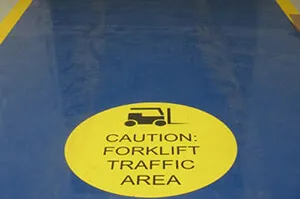
- Improved safety: Epoxy Flooring is impact resistant, slip resistant, and fire resistant. It also improves safety in a work area by improving brightness by 300% and outlining safety zones.
- Productivity increasing abilities: Our epoxy flooring can increase productivity in a factory, warehouse, or industrial plant by reducing wear on transport vehicle, providing faster material movement, and preventing wear and damage to the floor.
- Cost efficient flooring surface: Affordable epoxy flooring is a cost effective solution because it is able to reduce lighting costs and floor maintenance and cleaning costs. Finally, because this durable surface is resistant to chemical deterioration, a single, affordable application will last for years.
Epoxy Floor Coating Uses
Our epoxy floor coating product is a durable epoxy flooring that can be used for a variety of commercial and industrial applications. With a quick and easy application process, this concrete floor coating option is ideal for use in commercial and industrial buildings including in:
- Commercial Facilities
- Industrial Plants
- Food and Beverage Plants
- Pharmaceutical Manufacturing Buildings
- Water and Wastewater Treatment Plants
- Laboratories
- Storage and Shipping Warehouses
- Architectural Applications
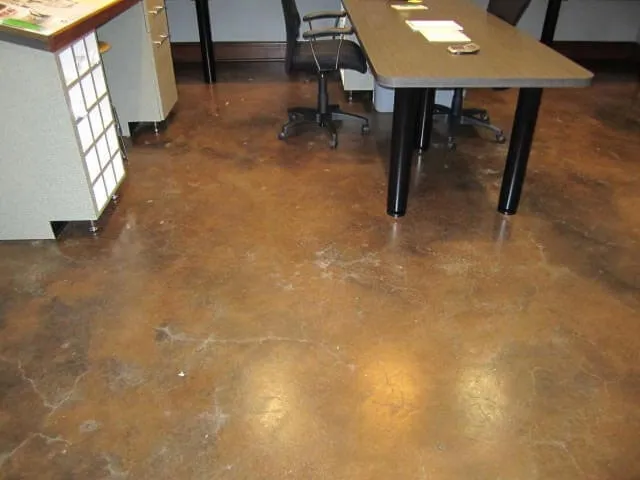 Stained Concrete Flooring
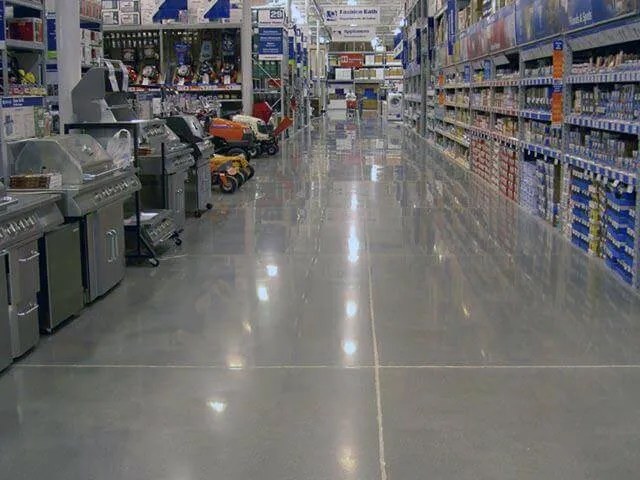 Polished Concrete Flooring
Choosing Professional Epoxy Flooring Installation
Advanced Environmental Services offers epoxy flooring installation services throughout Missouri in cities including St. Louis, St. Charles, and Columbia. With our professional epoxy flooring installation services, we can turn old or new concrete floors into durable, functional surfaces. If your building is new construction or has new concrete floors, epoxy floor coating can help improve the durability of the surface, making it last for years to come. If your building has older concrete floors, epoxy flooring will bring new life to your building. Even if your old concrete floors are in poor condition, an epoxy floor coating can be an affordable option for restoring damaged floors. Therefore, our epoxy flooring installation helps you avoid the costs of new concrete or other expensive flooring choices.
To learn more about our professional epoxy flooring application services for commercial and industrial concrete floor coating, please contact Advanced Environmental Services today.
Epoxy Flooring: Learn More
You can learn more information about epoxy floor coating and concrete finishing services by visiting our Epoxy Flooring and Concrete Finishing website. Here you can learn about:
- Vapor Barriers
- Epoxy Floor Paint
- Concrete Stain
- Concrete Polishing
- Concrete Grinding
- Epoxy Floor Coatings & What They Are
- Benefits of Epoxy Floor Coating Products
- Epoxy Coating Uses
- Types of Epoxy Coatings
- Benefits of Stained Concrete Floors
- Benefits of Concrete Grinding and Polishing
- What is Self Leveling Epoxy
- Benefits of Moisture Barriers
What is an epoxy floor coating, and where does it fit best?
An epoxy floor coating is a resin layer that bonds to concrete and cures into a hard, glossy, seam-free surface. It works best on floors that take chemicals, forklifts or constant cleaning. AES installs it in plants, warehouses, labs and garages across the St. Louis area.
AES describes its epoxy as high gloss, hard wearing, chemically resistant and self-leveling. Because the cured surface is nonporous and has no seams, it does not trap dirt. That is why food, beverage and pharmaceutical plants use it.
| Space | Why epoxy fits | What to ask |
|---|---|---|
| Manufacturing and industrial plants | Chemical resistance, wear resistance | Which chemicals touch the floor |
| Food and beverage plants | Nonporous, seam-free, wipes clean | Wash-down and drain needs |
| Pharmaceutical buildings and labs | Easy to clean, no seams to trap dirt | Dust control during install |
| Warehouses and shipping | Less wear from transport vehicles, bright surface | Forklift loads |
| Water and wastewater plants | Chemical resistance | Exposure type |
| Garages | Gloss, durable, easy to wipe | Hot tire pickup, moisture |
AES lists these uses: commercial facilities, industrial plants, food and beverage plants, pharmaceutical manufacturing buildings, water and wastewater treatment plants, laboratories, storage and shipping warehouses, and architectural applications. Its brochure also names airplane hangars, chemical plants, distribution facilities and residential garages. See the glossary entry on epoxy floor coating.
What systems does AES install?
AES’s floor division lists epoxy floor coating, chip systems, PVC flooring, shot blasting, moisture barriers, diamond grinding, underlayment pumping, concrete polishing and staining, and flooring and adhesive removal. This list comes from the AES brochure. Epoxy is the core product, and the others prepare or support it.
The main epoxy product AES links to is Perma-Tuff SL, a self-leveling epoxy made by Induron Protective Coatings. The pamphlet describes it as a two-component, 100% solids, high performance epoxy for properly prepared concrete floors. It says film thickness can be varied to suit different floor conditions. AES’s page says the same about varied film thickness, which is why one product can serve many jobs.
Here is how the pieces fit:
- Epoxy floor coating. The main system for gloss, chemical resistance and a seam-free surface.
- Chip systems. Listed in the brochure. Ask AES how a chip system fits your space.
- PVC flooring. AES’s brochure lists it as an option for commercial kitchens, clinics and bathrooms. It says seams are welded and can be coved to meet health codes.
- Underlayment pumping. The brochure says it can transform non-repairable concrete for forklift traffic in as little as 16 hours.
- Moisture barriers. A liquid layer under flooring that cuts vapor transmission.
- Shot blasting and diamond grinding. Prep methods that open the slab so coatings bond.
AES says its installation team has been factory trained and certified by the manufacturers, which assures product warranty. You can read the epoxy flooring brochure yourself.
Why does surface prep decide how long an epoxy floor lasts?
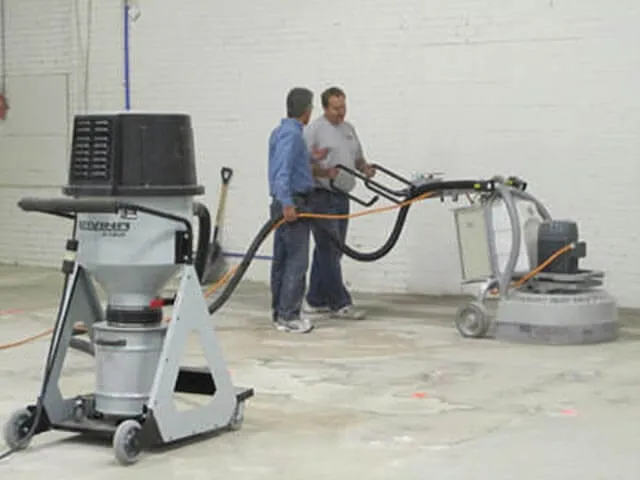
Epoxy only lasts as long as its bond to the slab. Dirt, oil, old coatings, glue and weak concrete break that bond. Prep removes them and opens the surface so the coating grips. For that reason, grinding or shot blasting is the first step on an AES epoxy job.
AES uses two prep methods. Shot blasting strips the surface mechanically. Concrete grinding uses diamond-disc machines with dust suppression systems. AES says dust control is essential in medical and pharmaceutical settings. See concrete grinding contractors for more.
A basic prep checklist:
- Remove old flooring, adhesive and coatings. See floor adhesive removal.
- Test old tile and glue for asbestos before disturbing them. AES says it is equipped to remove asbestos and lead containing materials before new flooring goes in.
- Grind or shot blast to open the slab.
- Repair cracks and low spots.
- Test for moisture.
- Clean and vacuum.
- Apply primer if the system calls for one, then the epoxy.
Skipping any step puts the coating at risk. The concrete floor prep guide explains each step in more detail.
When does a slab need a moisture barrier?
A slab needs a moisture barrier when it passes too much water vapor for the coating or flooring on top. Test the slab to find out. AES offers calcium chloride testing and relative humidity testing to measure the vapor transmission rate, known as MVER, and decides from the results.
Moisture is the hidden reason many coatings fail. Vapor rising through concrete can push against a coating until it lifts or bubbles. A barrier stops that. The moisture barrier glossary entry gives a short definition.
AES applies two-component, seam-free liquid epoxy barriers over concrete and under the finished floor. The moisture barriers page and the brochure list these features:
- Ability to treat concrete at 25 lb. MVER and 100% humidity
- Vapor transmission reduced to near zero
- Zero VOC rating, which contributes to LEED / GREEN building
- Compatibility with most floor covering surfaces
- Application over dry or damp surfaces, even 5-day old concrete
- An available 10 year guarantee
Word that last point carefully. The 10 year guarantee is a feature the brochure lists for the liquid barrier product. It is not a blanket promise for every AES floor. Ask for the guarantee terms in writing: what it covers, who backs it and what slab conditions apply.
| Question | Why it matters |
|---|---|
| What are the MVER and humidity readings? | They show whether a barrier is needed |
| Is the concrete new? | Fast-track jobs often cannot wait for full cure |
| What goes on top? | Tile, vinyl, carpet, wood and epoxy react differently |
| Is there cooler or wet-area use? | AES lists coolers and wet weather among barrier uses |
Epoxy or polished concrete: which fits my space?
Choose epoxy for chemical resistance, a seam-free nonporous surface and marked safety zones. Choose polished concrete for a natural look, simple care and a surface that comes from the slab itself. Both begin with grinding, and AES installs both.
| Factor | Epoxy floor coating | Polished concrete |
|---|---|---|
| How it works | A coating bonds on top of the slab | The slab itself is ground and polished |
| Chemical resistance | High, per AES | Improves with a sealer |
| Seams | None, per AES | None, but joints in the slab remain |
| Look | High gloss, solid colors and safety zones | Stone-like, can be stained |
| Maintenance | Wipe or mop | Damp cloth or mop, per AES |
| Refinish | Recoat when worn | AES says heavy-traffic floors may need refinishing every 5 to 10 years |
| Moisture risk | Needs a slab test | Less coating to lift, but still check |
AES says epoxy improves safety. It is impact, slip and fire resistant, and it improves brightness by 300% and outlines safety zones. It also says epoxy can raise productivity by reducing wear on transport vehicles and speeding material movement. These are AES’s own statements about its product.
For a deeper side-by-side, read polished concrete vs epoxy and the concrete polishing page. If you want color on polished concrete, see concrete staining.
How long does installation take, and when can the floor be used?
AES does not publish one install time for epoxy. The schedule depends on slab condition, prep needs, moisture, the number of coats and the product’s cure time. Ask for a day-by-day plan, including when foot traffic, then forklift traffic, is safe.
AES says its epoxy has a quick and easy application process and that it is self-leveling, which makes it quick and easy to install over new or old concrete. The brochure says underlayment pumping can ready non-repairable concrete for forklift traffic in as little as 16 hours. That figure applies to underlayment, not to the epoxy coat.
When you request a quote, ask:
- How many days will the floor be closed?
- When can people walk on it? When can vehicles drive on it?
- Can the job run in phases to keep part of the building open?
- What temperature and humidity does the product need?
Garage, warehouse, healthcare, food plant: what changes?
The system, the prep and the paperwork change with the space. A garage needs a tough, easy-clean finish. A warehouse needs wear resistance and visible lanes. A healthcare or food space needs a seam-free, nonporous surface and dust control. A plant may need chemical resistance first.
| Space | What changes |
|---|---|
| Garage | Residential garages are on AES’s brochure list. Check for moisture and old sealers. |
| Warehouse and shipping | Safety zones and lane markings help, and AES says epoxy reduces wear on transport vehicles. |
| Healthcare and pharmaceutical | Seam-free, nonporous floors do not trap dirt, and dust suppression during grinding is essential. See healthcare environmental services. |
| Food and beverage | AES notes the nonporous, seam-free surface suits food preparation and packaging plants. Ask about wash-down and coving. |
| Chemical or industrial plant | AES calls its epoxy chemically resistant. Name the chemicals so the system is matched. |
Older buildings add one more step. Floors from older eras may have asbestos-containing tile or adhesive. AES can test and remove it under the rules before it coats the slab. See asbestos floor tile and asbestos testing. The gallery shows epoxy flooring and concrete finishing projects.
Next step
Tell AES about the space, the slab and the use. Call (314) 865-2662 or request a free quote on the contact page. Ask for slab moisture testing, a written prep plan and the terms of any guarantee.
Frequently asked questions
What is an epoxy floor coating?
It is a two-part resin coating applied over concrete that cures into a hard, seam-free, high-gloss surface. AES installs a self-leveling epoxy that it describes as durable and chemically resistant. It turns porous concrete into a nonporous floor that wipes clean and does not trap dirt.
Do I need a moisture barrier before epoxy?
Sometimes. A slab that passes moisture vapor can lift or bubble a coating. AES tests with calcium chloride and relative humidity methods to measure vapor transmission, then tells you if a barrier is needed. Test first, because the result changes the system you should install.
How long does an epoxy floor last?
AES says epoxy gives a durable floor for years and that one application can last because the surface resists chemical deterioration. It does not publish a set number of years. Prep, slab moisture, traffic and chemical exposure all affect life, so ask for a written warranty and read its terms.
Is epoxy or polished concrete better for my space?
Pick epoxy when you need chemical resistance, a seam-free nonporous surface or marked safety zones. Pick polished concrete when you want a natural stone look with simple damp-mop care. Both start with grinding. AES installs both, so describe your use and ask for a recommendation.
Can epoxy go over an old, damaged slab?
AES says epoxy can go over new or old concrete and can be an affordable way to restore damaged floors. The slab still needs repair and prep first. For badly damaged concrete, AES also lists underlayment pumping to rebuild the surface before coating.
What does a moisture barrier cost or guarantee?
AES does not publish a price. It quotes each job. Its brochure lists an available 10 year guarantee as a feature of its liquid moisture barrier products. Ask what the guarantee covers, who backs it and what slab conditions it requires before you rely on it.