
What are the steps in professional asbestos removal?
There are nine steps: survey, plan, notice, setup, removal, cleanup, packing and disposal, clearance testing, and teardown of the containment. Each step has a reason, and skipping one is how fibers end up in rooms they never touched. This guide walks through them in the order a regulated job runs.
| Step | What happens | Who does it |
|---|---|---|
| 1. Survey and sampling | Inspector finds suspect material and sends samples to a lab | Missouri certified asbestos inspector |
| 2. Plan | Scope, quantities, methods and waste route are written down | Abatement contractor |
| 3. Notice | Project notification filed with the right agency | Owner and contractor |
| 4. Setup | Work area marked, air handling shut off, room sealed | Abatement crew |
| 5. Removal | Material wetted and taken out in controlled pieces | Certified workers |
| 6. HEPA cleanup | Surfaces cleaned with HEPA vacuums and wet wipes | Abatement crew |
| 7. Packing and disposal | Waste sealed wet in labeled containers and hauled to a qualified landfill | Registered contractor |
| 8. Clearance | Visual check and air samples | Independent asbestos consultant |
| 9. Teardown | Containment removed after the clearance result | Abatement crew |
Asbestos only harms people when its fibers get into the air. The US EPA says that asbestos-containing material is a risk when it is disturbed or damaged. Every step below exists to keep the material from being disturbed in an uncontrolled way, or to catch fibers if it is.
Why does the job start with a survey and lab samples?
Because no one can tell asbestos by looking at it. A certified inspector finds every suspect material in the work area, takes samples, and sends them to a lab. The lab result decides what is regulated, how much there is, and what the job will cost and involve.
Missouri DNR describes the inspection this way in its fact sheet PUB2157. Before demolition or renovation, regulated structures must be inspected by a Missouri certified asbestos inspector. The inspector writes a report that lists each suspect material, with the amount, location, category and condition. The report includes lab results and chain of custody for every sample.
Common suspect materials in homes and buildings include floor tile and its adhesive, sheet flooring backing, textured paint, roofing and siding shingles, pipe and boiler insulation, and attic insulation. Our asbestos survey and asbestos testing pages explain what an inspection covers. AES staff include AHERA certified building inspectors, and Mr. Ruckman is trained and certified as an Asbestos Inspector and Supervisor.
The report sorts material into three groups, which matter later:
- Friable asbestos crumbles to powder under hand pressure. Sprayed ceiling texture and old pipe insulation are examples. It needs the most care.
- Category I non-friable asbestos includes floor tile, gaskets and asphalt roofing. It stays bound until someone sands, cuts or breaks it.
- Category II non-friable material includes asbestos cement shingles and pipe. It can turn to dust if work practices crush it.
Who decides if the job must use a registered contractor?
The quantities do. Missouri DNR says that when an inspection finds 160 square feet, 260 linear feet or 35 cubic feet or more of regulated material will be affected, all of it must be removed by a Missouri registered asbestos abatement contractor.
“Regulated” has a specific meaning. Regulated asbestos-containing material includes friable material, and non-friable material that is or will become friable through sanding, grinding, cutting or demolition methods. A small amount of intact floor tile may not reach that line. A full tear-out of a ceiling and pipe system usually does.
Not every home is covered. DNR says its asbestos rules apply to commercial structures and some residential ones, and that most single-family residences are exempt. Its fact sheet explains that a single residential building with four or fewer dwelling units is excepted, but projects with two or more residential structures are not. Missouri also says that for any asbestos work, regulated or not, trained professionals who know OSHA standards should be considered. Many homeowners still hire a registered contractor for that reason.
If you are not sure which side of the line you are on, read our guide to Missouri demolition and renovation asbestos rules, then call us at (314) 865-2662.
What notice must be filed before removal starts?
For a regulated project, Missouri DNR requires notification at least 10 working days before crews begin. The notice goes with a copy of the inspection report and lab results. Demolition notices are required even when no asbestos is found.
The owner and any contractors share the duty. DNR states that it is the obligation of the owner and any contractors involved to make sure notifications are provided. A review fee applies to each notification. In the City of St. Louis, notices go through the city’s permit system, and in St. Louis County they go to the County health department. Our St. Louis City permit post and 10 working days post cover the details.
The ten working days are not wasted. DNR says the period lets the department inspect the project and check that it follows the rules. Plan your calendar around it.
How does the crew set up the work area?
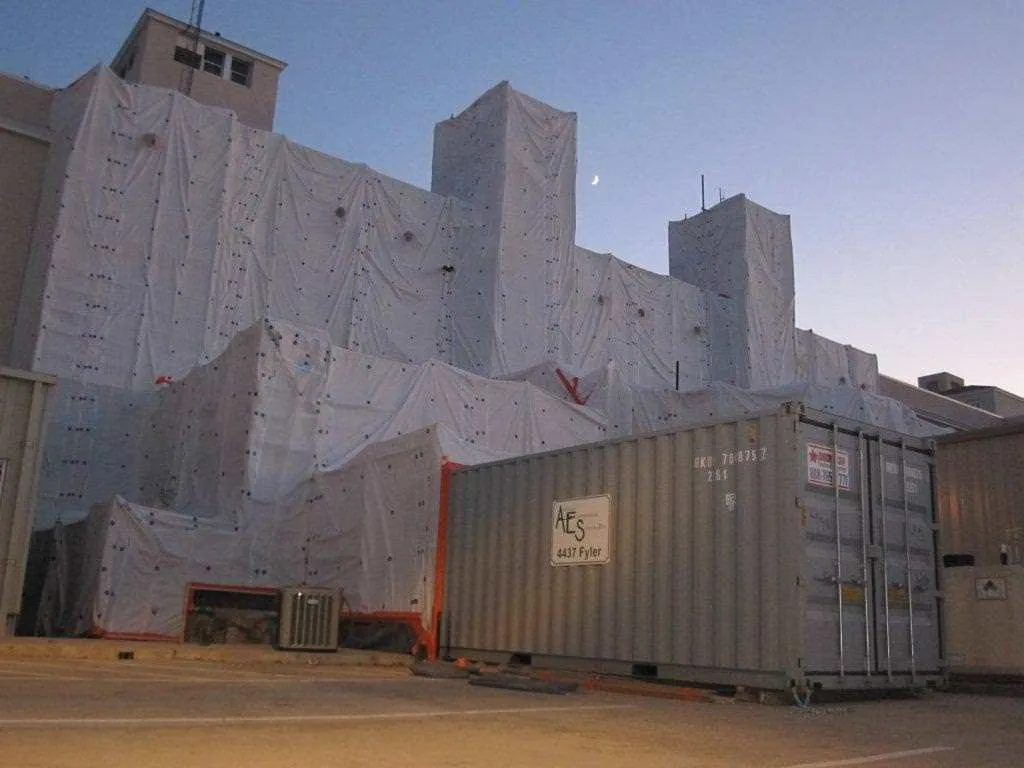
The crew marks the area, sends people out, shuts down air handling, and seals everything that is not part of the job. This is called containment. Its goal is to keep fibers inside one controlled space.
AES describes its own setup on its guide page. The area is demarcated based on the plan, and occupants are told to leave the area until the work is complete. The HVAC system is disabled, air ducts are sealed, and areas not being treated are sealed off with plastic sheets. We use industrial plastic sheets to seal off the contaminated area.
On larger jobs, crews also add a decontamination area where workers suit up and clean off, and they run a negative air machine with a HEPA filter. Negative air pulls air into the work area and through the filter, so a leak in the plastic lets clean air in instead of letting dust out. The EPA’s training outline for NESHAP names negative pressure enclosures, glove-bag procedures, HEPA filters and adequate wetting as core topics, so these are standard tools.
How is the asbestos taken out?
Wet, slowly, and in as few pieces as possible. The EPA says work practices often involve removing all asbestos-containing materials, adequately wetting them, sealing them in leak-tight containers and disposing of the waste as quickly as practical.
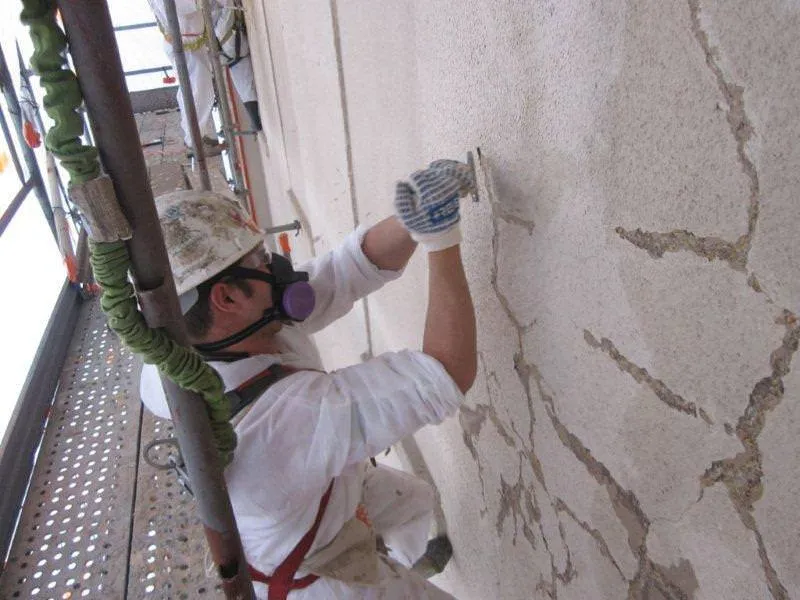
Wetting keeps fibers from going airborne. Crews use hand tools and approved chemicals to take out or repair the material. They wear protective suits and respirators. Material that can be removed whole, such as a section of pipe wrap or a sheet of siding, comes out whole. Floor tile may be lifted with tools made for the job, and the black adhesive under it, called mastic, can contain asbestos too, so it is handled with the same controls.
This is the step you should never try yourself. Disturbing material without containment, wetting and respirators is how a small problem becomes a contaminated house. The EPA’s vermiculite page makes the same point for attic insulation: do not attempt to remove it yourself and hire a professional contractor if work would disturb it.
What happens to the waste?
It is sealed wet in labeled, leak-tight containers and hauled to a landfill that is qualified to take asbestos. The EPA rule also sets labeling and record rules for the vehicles that move the waste.
Missouri DNR adds that waste from regulated projects must go to an approved sanitary landfill or transfer station through registered abatement contractors. Non-friable material that never became regulated is still solid waste and must go to an approved facility. Our asbestos disposal page covers this side of the job. Ask any contractor for the landfill name and the waste shipment records.
How is the area cleaned after removal?
With HEPA vacuums and wet wiping, on every surface in the work area. HEPA vacuums trap very small particles. The crew changes the vacuum bags with care so that fibers are not released when a bag is swapped.
AES lists this as its own step: specialized vacuums clean up asbestos-containing materials and surrounding surfaces, and the change-out of vacuum bags is done carefully to prevent the release of fibers. The cleanup is slow on purpose. Fibers settle on ledges, studs and floors, and a quick sweep spreads them.
How does clearance testing prove the area is clean?
An asbestos consultant inspects the area and takes air samples, and the area is cleared only if the samples pass. The consultant then issues a clearance letter. This is called a clearance air test.
Two details protect you. First, the clearance step is done by an asbestos consultant, which keeps a second set of eyes on the work. Second, the containment stays up until the result is in. If a contractor wants to pull the plastic before the air test, say no.
AES’s FAQ page says that after removal, the air in and around the building is tested for fibers, and that air is deemed safe if it meets the OSHA permissible exposure limit of 0.1 fiber per cubic centimeter. Ask the consultant which standard and method the clearance uses, and keep the letter with your property records. It helps at resale and for later renovation.
Is removal the right fix, or are there other choices?
Not always. Removal is the permanent fix. Encapsulation coats the material so it cannot shed fibers, and it is faster and often less costly, but the asbestos stays. AES notes on its FAQ page that the asbestos will remain and may cause a problem later as it ages. Material in good condition that no one will touch may simply be monitored.
| Choice | What it does | Fits when | Trade-off |
|---|---|---|---|
| Remove | Takes the material out of the building | Renovation or demolition will disturb it, or it is damaged | Highest effort, permanent |
| Encapsulate | Seals the material with a coating | Material is intact and stays in place | Asbestos remains; must be rechecked |
| Leave and monitor | No work | Good condition, no planned disturbance | Needs periodic inspection |
Our comparison page on asbestos encapsulation vs removal goes deeper, and abatement vs remediation explains the words contractors use. The glossary entry on abatement vs remediation is a short version.
How do I know a contractor will follow these steps?
Check the DNR contractor registry and ask to see the written plan. A registered contractor can show a Missouri registration number, certified workers and a waste route. Our guide on hiring an asbestos contractor in Missouri gives a full checklist.
Advanced Environmental Services, Inc. appears on that DNR contractor list under registration 27-06-0640. AES is a Union Signatory Contractor affiliated with the Laborers’ International Union of America Local 110 and Local 42, as well as the International Union of Operating Engineers Local 513. AES says it has never had a citation from any government regulatory agency, including the US EPA or OSHA, and that it has a good working relationship with St. Louis City Air Pollution Control, the St. Louis County Department of Health and Missouri DNR.
Next step
If you have a project and want a survey or a written scope, see our asbestos abatement page, call (314) 865-2662 or send the quote form at /contact. We will tell you what the steps look like for your building before any work starts.
Frequently asked questions
How long does asbestos removal take?
It depends on the size of the area and the type and amount of material. AES says on its asbestos FAQ page that time varies with the contaminated area and the asbestos present. A small floor tile job and a full building strip are very different. Ask for a written schedule after the survey.
Do I have to leave my home during removal?
Often yes. Occupants are asked to leave the work area until the job is done. For smaller projects, AES says you may not need to vacate the premises at all, because plastic sheeting seals off the work area. Your contractor sets this after the survey.
Can I remove asbestos myself?
Do not try it. Disturbing asbestos releases fibers into the air. Missouri rules require a registered abatement contractor when regulated material reaches the threshold amounts, and trained crews use respirators, containment and HEPA equipment. Call a registered contractor instead.
What happens to the asbestos waste?
The EPA says the waste generally must be sealed in a leak-tight container while wet, labeled, and disposed of in a landfill qualified to receive asbestos waste. Trucks that carry it have labeling and shipping record rules too.
How do I know the job is finished?
A clearance step confirms it. After HEPA cleanup, an asbestos consultant inspects the area and takes air samples. If the samples pass, the consultant issues a clearance letter. Do not let anyone take down the containment before that.
Is removal the only option?
No. If material is in good condition and not going to be disturbed, encapsulation or leaving it alone can be options. A survey tells you which one fits. Removal is the usual answer when a renovation or demolition will disturb the material.
Terms on this page
Sources
- Missouri DNR: Asbestos
- Missouri DNR: Asbestos Requirements for Demolition and Renovation Projects (PUB2157)
- US EPA: Overview of the Asbestos NESHAP
- US EPA: Learn About Asbestos
Written by Advanced Environmental Services and checked against the sources above on October 30, 2026. Rules change, so check the linked page before you act.