What does tank removal and closure mean in Missouri?
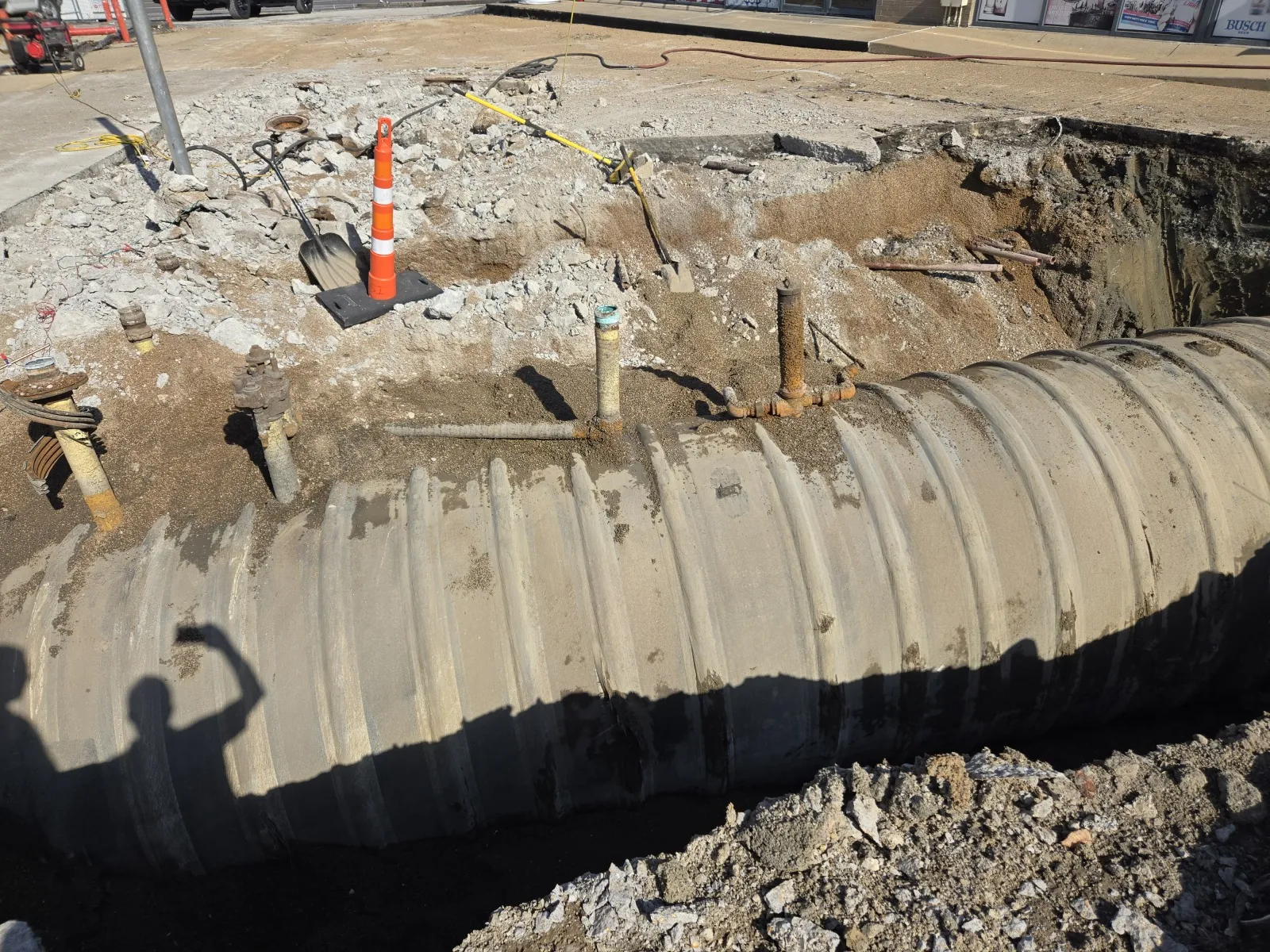
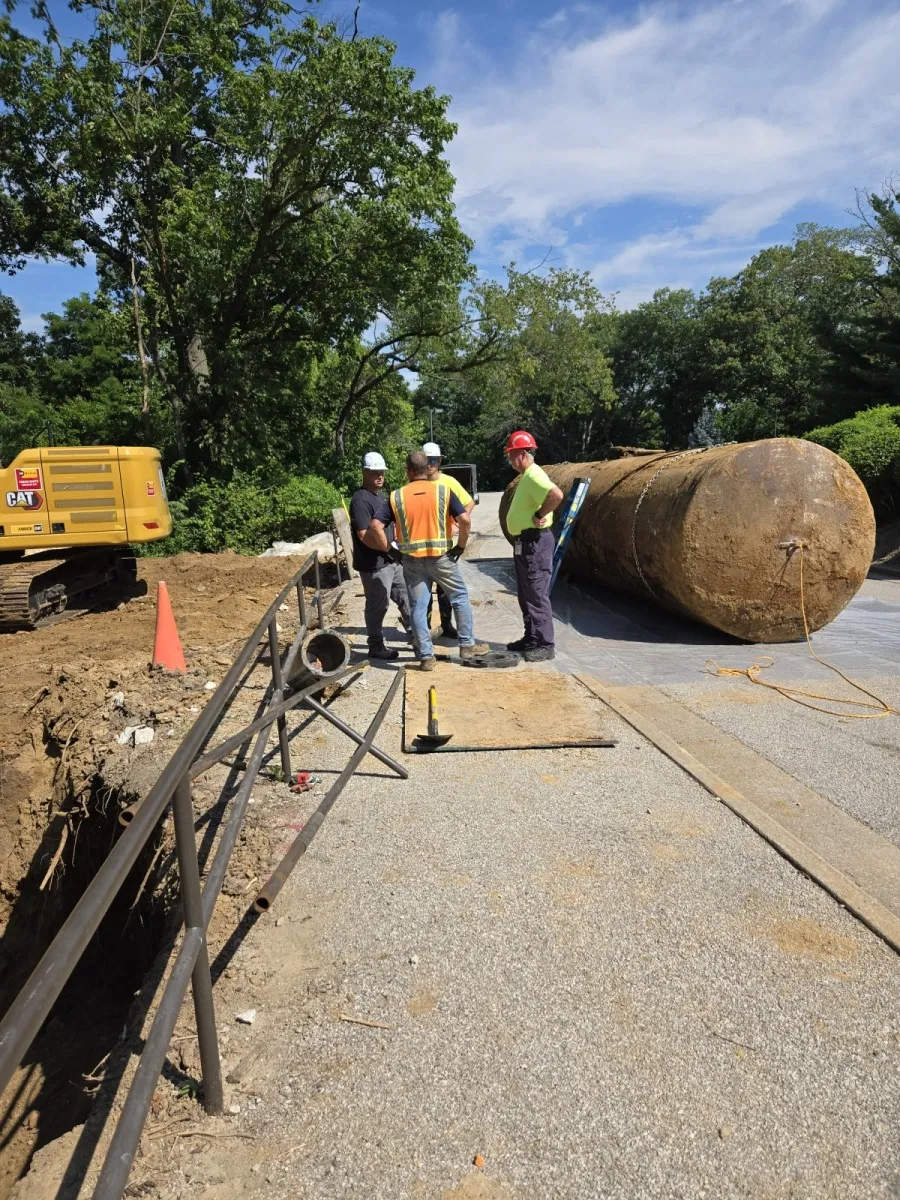
Tank removal takes a tank out of service and out of the site. Closure is the regulatory side: the notices, the soil check and the report that prove the tank is gone or sealed. For a regulated underground tank, Missouri DNR sets the steps. A contractor does the physical work.
Both parts matter. If the owner skips the DNR notice or the closure report, the site can still have an open file. This guide covers both parts so you know what to expect and who does what.
The information below reflects the Missouri DNR page on regulated storage tank closure, read in October 2026. Rules change. Check the DNR page before you file, and confirm with DNR whether your tank is regulated.
Advanced Environmental Services (AES) provides tank removal for residential and commercial sites. AES says its tank work is compliant with all federal and state regulations.
Is my tank regulated by DNR?
It depends on the tank type and what it held. DNR regulates underground storage tanks (USTs) under Missouri’s Underground and Petroleum Storage Tank Law, depending on what is or was stored in the tank and its purpose. Above ground tanks follow different rules.
DNR defines a UST as a tank and any underground piping connected to it that has at least 10 percent of its combined volume underground. That definition is the first test.
| Tank type | What DNR says | Who to contact |
|---|---|---|
| Underground storage tank (UST) | May be regulated under Missouri’s Underground and Petroleum Storage Tank Law, depending on contents and purpose | DNR Underground Storage Tanks Section, 573-751-6822 |
| Above ground storage tank (AST) | DNR does not regulate operation, but does oversee cleanup of petroleum releases from leaking ASTs | Missouri Department of Agriculture, 573-751-5636 |
| Septic tank | Not covered by the DNR page used for this guide | Ask your county or city permitting office |
See the glossary entry for underground storage tank (UST). If you are not sure, ask DNR before you hire a crew. A short call can save a stop-work problem later.
What are the DNR steps to close an underground storage tank?
DNR lists five closure steps. File the closure notice at least 30 days ahead. Tell DNR three days before work starts. Report any spill at once. Dispose of the tank properly. Submit a final Closure Report.
Here is the sequence as DNR publishes it, in order.
- File Closure Notice MO 780-2121 with DNR at least 30 days before closure activities. DNR says it should approve the notice before closure begins.
- Notify DNR at least three days before work begins on site.
- Report any spill or leak immediately to the Environmental Services Program Emergency Spill Line, 573-634-2436.
- Dispose of the tank and materials according to applicable regulations.
- Submit the final Closure Report and supporting documents. DNR lists Closure Report MO 780-2120, Tank Closure Checklist PUB2218, and, for closure in place, a Statement of Closure Deed Notice.
Closure also follows Section 4 of the Missouri Risk-Based Corrective Action (MRBCA) process for petroleum storage tanks, or another process DNR approves.
The 30-day clock drives your schedule. If you want the tank gone by a certain date, count backward from it.
When must an unused tank be assessed and closed?
An unused UST has two clocks. A site assessment is due within 12 months of the tank going out of use. Permanent closure is due within five years. Fees keep running until the tank is removed or permanently closed.
DNR says a UST is “out of use” when it has been emptied so that no more than one inch of product remains, or no more than 0.3 percent by weight of the total capacity remains.
| Milestone | Deadline per DNR |
|---|---|
| Tank taken out of use | Day 0 |
| Site assessment | Within 12 months |
| Closure notice filed | At least 30 days before closure work |
| Notice that work is starting | At least 3 days before closure activities |
| Permanent closure | Within 5 years of going out of use |
The site assessment must include soil and groundwater sampling in the areas where a release would have most likely occurred. DNR says soil borings should go on each side of the tanks, piping and pump islands or dispensers, and sampling points should reach groundwater if groundwater is found.
If you find an old tank on a property you own, the clock may already be running. A records search and a quick call to DNR give you the status.
Should I remove the tank or close it in place?
Both count as permanent closure under DNR’s rules. Removal takes the tank and piping out of the ground. Closure in place seals the tank where it sits. Your site, your plans for the land and DNR’s approval decide which fits.
Removal lets you sample the soil under the tank. DNR notes that additional soil samples under the tanks are taken during tank removal when earlier data is reused for the closure report.
Closure in place is an option DNR allows. DNR requires a Statement of Closure Deed Notice for in-place closures, which puts the tank on the property record.
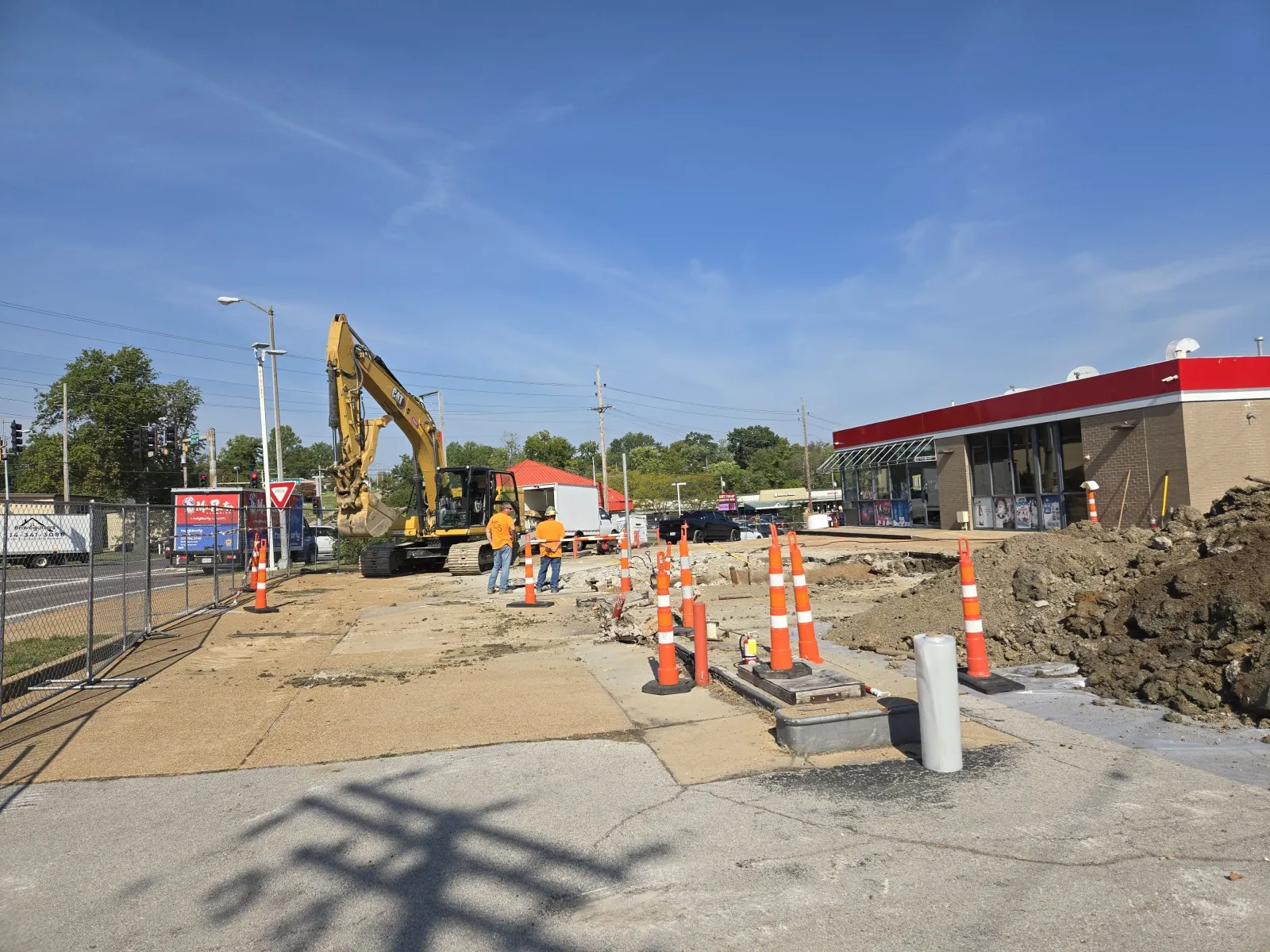
Ask your contractor and your environmental consultant to compare both on your site. AES offers hydro excavation to carefully expose underground tanks without damaging surrounding infrastructure.
What does a tank removal contractor actually do?
A tank contractor cleans the tank, removes it, decontaminates the site and hauls the waste away. AES lists three core services: industrial tank cleaning, tank demolition and disposal, and decontamination.
Here is how AES describes each part of its tank removal work.
- Industrial tank cleaning. Before any removal, a cleaning crew clears hazardous material and residue. AES says this protects the environment and workers.
- Tank demolition and disposal. Once clean and decontaminated, the tank is dismantled and removed. AES says disposal comes with safe transport and disposal facilities, and that it follows strict environmental guidelines.
- Decontamination. AES decontaminates the site after removal, including removing hazardous materials and sanitizing the site.
AES also lists related services that tank jobs often need:
| Service | What AES says |
|---|---|
| Confined space entry | Trained professionals certified to work in confined spaces |
| Hydro excavation | Precise excavation to expose underground tanks without damaging surrounding infrastructure |
| Soil excavation | Removes and disposes of contaminated soil |
| Site remediation and spill cleanup | Handles spills and contamination |
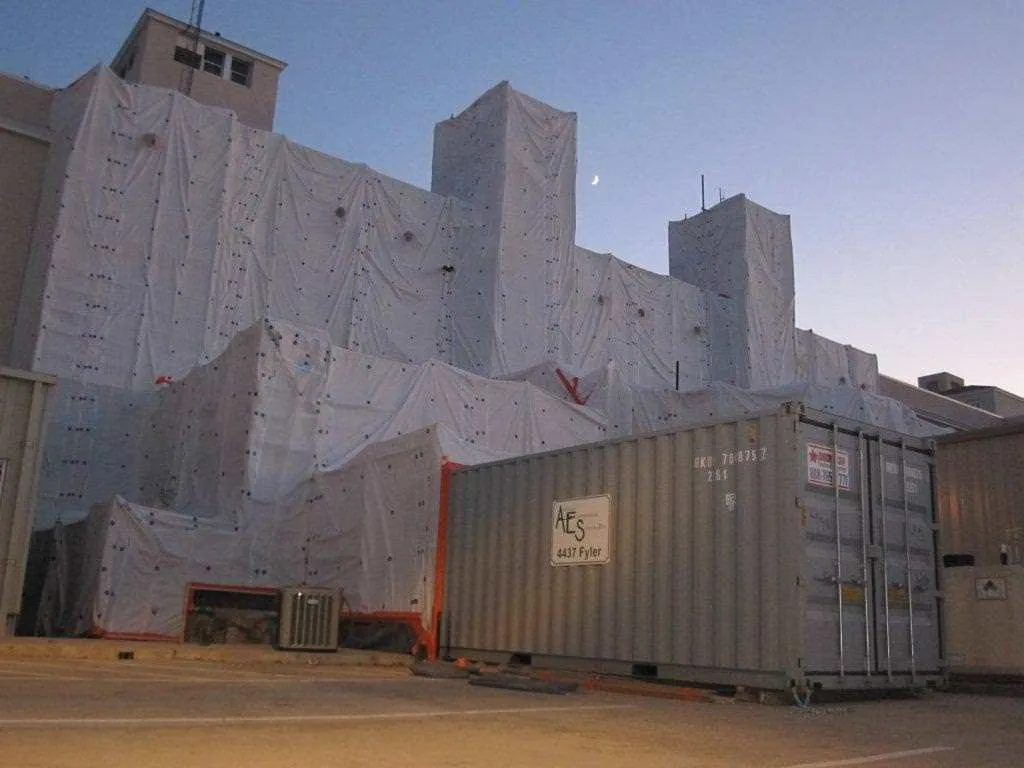
| Facility demolition | Handles tank removal inside a larger demolition project |
| Asbestos and lead abatement | Removes hazardous materials such as asbestos or lead during tank projects |
| Trench and drain cleaning, concrete pad cleaning and cutting | Extends cleaning to other facility areas |
| Sand and grit traps, hydro blasting (20K and 40K) | Specialized cleaning |
AES adds that it handles Vac truck services and tank types including oil tank removal, fuel tank disposal, gas tank disposal, asbestos tank removal and septic tank removal.
What happens if the soil is contaminated?
If tank soil is contaminated, the cleanup becomes its own project. The contractor excavates the soil, a lab tests it, and the waste goes to an approved facility. DNR oversees site investigation and cleanup at regulated leaking underground storage tank sites.
DNR states that Missouri has reported over 4,900 releases from USTs in the past 10 years. It says releases can cause fires or explosions that threaten human safety, and can contaminate groundwater that many citizens depend on for their water supply.
For a regulated leaking UST, DNR provides technical oversight. That includes reviewing and approving site investigation reports, corrective action plans and quarterly monitoring reports. DNR lists accepted technologies such as push probe sampling, monitored natural attenuation, soil vapor extraction and bioremediation.
DNR also notes that petroleum-contaminated soil, when managed properly, may be used in many construction applications as a substitute for other fill. The department has a fact sheet on this (PUB2177).
AES lists soil remediation (see the glossary entry for soil remediation), contaminated soil disposal and environmental remediation services as part of its range. For hazardous waste leaving the site, see the glossary entry for hazardous waste and AES’s hazmat remediation page.
How does tank removal fit into a demolition or redevelopment project?
Tank removal often runs alongside demolition. If a building is coming down, the tank must come out first or at the same time. Planning them together saves a second mobilization and avoids delays on notices.
AES lists underground storage tank removal as one of its demolition services, next to total building removal, interior demolition and trash removal. AES says that if tank removal is part of a larger facility demolition project, it can handle the demolition with the same attention to safety and compliance.
That leads to a coordination point. Tank closure uses a DNR closure notice. Demolition of a regulated structure uses an asbestos notification, filed at least 10 working days before work starts. Different forms, different clocks. A single contractor that tracks both helps. For the demolition side, see demolition, from survey to debris and Missouri demolition and renovation asbestos rules.
How much does tank removal cost?
Tank removal cost depends on the tank type, size, location, contents, and whether soil is contaminated. AES does not publish tank prices and quotes each job. A reliable bid breaks out cleaning, removal, disposal, soil work and any DNR-related testing.
Ask for line items so you can compare bids. Cleaning, removal, disposal, soil work and testing are separate pieces of scope.
AES says it offers a same-day quote on tank work and customized service to fit your requirements and budget. To get a number, send the tank type, size, location, what it held, and any DNR records you have.
What should I ask before I hire a tank contractor?
Ask what the contractor handles and what stays with you. A good contractor explains the DNR steps, names who files what, and describes how waste leaves the site. Use this checklist.
- Is the tank regulated, and how do you know?
- Who files the DNR closure notice and the closure report?
- Who supplies lab testing for soil and groundwater?
- Do you clean the tank before removal, and how do you handle residue?
- Do you have confined space entry capability?
- What happens if you find a leak or contaminated soil?
- Where does the tank and waste go?
- Can you coordinate with demolition or abatement on the same site?
Compare answers in writing. A contractor who is vague about the DNR notice is a risk to your schedule.
Next step
Planning to remove or close a tank in St. Louis, St. Charles or Columbia, Missouri? Start at AES tank removal, then call (314) 865-2662 or send the quote form at /contact. Have the tank type, size and any DNR paperwork ready.
Frequently asked questions
Do I have to tell Missouri DNR before I close an underground tank?
Yes, for a regulated underground storage tank. DNR says to file Closure Notice MO 780-2121 at least 30 days before closure activities, and to notify the department at least three days before work begins. DNR says it should approve the notice before closure starts. Confirm that your tank is regulated first.
What is the difference between removing a tank and closing it in place?
Both count as permanent closure under DNR's page. Removal takes the UST and its piping out of the ground. Closure in place seals the tank where it sits. Both methods require you to notify DNR before closure. Closure in place also uses a deed notice statement on file with the department.
How long can an unused tank sit before it must be closed?
DNR says tanks that stay out of use must be permanently closed within five years of being taken out of use. A site assessment must be done within 12 months of taking the tank out of use. Out-of-use tanks keep accruing registration fees until they are removed or permanently closed.
What do I do if I find a leak or spill during removal?
Tell DNR immediately. DNR says all reports go to its Environmental Services Program Emergency Spill Line at 573-634-2436. Contaminated soil then has to be investigated and handled. AES offers soil excavation, spill cleanup and site remediation as part of tank projects.
Does DNR regulate above ground tanks?
DNR says it does not regulate the operation of above ground storage tanks. It does regulate and oversee cleanup of petroleum releases from leaking ASTs. For AST operating rules, DNR points owners to the Missouri Department of Agriculture at 573-751-5636.
What types of tanks does AES remove?
AES lists oil, fuel, gas, asbestos-insulated and septic tanks, plus industrial tanks. It also offers industrial cleaning, Vac truck services, decontamination, confined space entry, hydro excavation and soil excavation. Each job is quoted, and AES offers same-day quotes on tank work.
Terms on this page
Sources
- Missouri Department of Natural Resources: Regulated Storage Tank Cleanup and Closure
- Missouri Department of Natural Resources: Regulated Storage Tank Cleanup and Closure
- Missouri Department of Natural Resources: Regulated Storage Tank Cleanup and Closure
- Missouri Department of Natural Resources: Regulated Storage Tank Cleanup and Closure
- Missouri Department of Natural Resources: Regulated Storage Tank Cleanup and Closure
- Missouri Department of Natural Resources: Regulated Storage Tank Cleanup and Closure
- Missouri Department of Natural Resources: Regulated Storage Tank Cleanup and Closure
Written by Advanced Environmental Services and checked against the sources above on October 30, 2026. Rules change, so check the linked page before you act.