
What is an MBE in Missouri?
A Minority Business Enterprise (MBE) is a business at least 51% owned and controlled by one or more minority persons. That is the definition the Missouri Office of Equal Opportunity (OEO) publishes for the state’s certification program.
OEO adds detail. For the state’s MBE program, a racial minority means individuals who are Black, American Indian, Hispanic, Asian American and other similar racial minority groups, as set in Missouri Revised Statutes Chapter 33, Section 33.750. Alaskan Natives, Pacific Islanders and Aleuts are also included.
Ownership alone is not enough. OEO lists requirements that include having the requisite expertise, owning at least 51% of the enterprise, controlling management and daily operations, and being a U.S. citizen or lawfully admitted permanent resident.
See the glossary entry for MBE (Minority Business Enterprise). For a shorter read on what certification signals to a prime, see what Missouri MBE certification means.
Why do public owners care about MBE participation?
Public owners use MBE participation goals to widen access to contract work. Each owner sets its own goal and its own rules. Primes bidding public work need to read the solicitation to see what applies.
One Missouri example: Missouri State University’s design office says that for construction contracts bid through its office, MBE, WBE and SDVE provisions apply. It states: “The bidder shall have as a goal subcontracting not less than ten percent (10%) MBE, five percent (5%) WBE, and three percent (3%) SDVE of the awarded contract price for work to be performed.” The university says it does not certify firms itself and uses the directory kept by OEO.
That example is one owner. Your project may use a different number or a different structure. Do not assume. Read the bid documents and ask the owner’s procurement office.
| Question | Where to find the answer |
|---|---|
| What is the participation goal? | The solicitation or the owner’s procurement office |
| Who counts as qualified? | The owner’s rules; many use OEO’s directory |
| What reports are due? | The contract; state work uses participation reports |
| Who monitors compliance? | The owner; for state contracts, the Office of Administration |
How does Missouri certify an MBE?
Missouri certifies MBEs through the Office of Equal Opportunity. A firm applies, submits documents, and may have an on-site visit. OEO says the application is free, and the standard process for Missouri-based businesses takes approximately 60 to 90 days.
OEO also notes:
- Certification with another state is not automatic. A firm certified by another Missouri certifying entity is not automatically certified either. It applies to OEO through the Rapid Response Process, which needs documentation but takes less time than the standard process.
- OEO does not guarantee approval and reviews each submission on its own merits.
- Certified firms must complete an annual update before the anniversary date, and re-certify when the certificate expires. OEO sends reminders by email.
- A denied firm can wait six months and reapply, or appeal to the Commissioner of the Office of Administration within 21 calendar days.
An on-site visit is a verbal and visual check of the owner’s ability to meet the certification requirements.
For a prime contractor, the lesson is simple. A current certificate means the firm has gone through this review. A lapsed or unverified claim does not give you the same assurance.
Does a firm need certification to work on Missouri public projects?
No. OEO says a firm’s MBE status does not preclude it from bidding on state contracts or bidding with prime contractors for subcontracts, and that certification is not necessary to do business with the State of Missouri. Certification gives certified firms greater opportunity to bid on state contracts.
Certification matters for another reason. State agencies and primes use OEO’s Directory of Certified M/WBE Vendors to find certified participation. If a firm is not in the directory, the owner may not count it toward a goal.
OEO notes the state certification covers all state agencies except the Missouri Department of Transportation (MoDOT), which participates in the federal Disadvantaged Business Enterprise (DBE) program. Highway work follows a different path.
Federal work uses other systems. For federal contracts, firms register in SAM.gov. See the next section and the AES MBE and government contractor page for the identifiers AES publishes.
How do I verify an MBE contractor?
Verify in three layers: the state directory, the certificate itself, and the scope of work. A name in a bid is not proof. A current listing and a matching scope are.
- Search OEO’s Directory of Certified M/WBE Vendors. This is the state’s public list.
- Ask for the current certificate. Check the certification number, the legal name and the issuing office. Check that the certification is current and that the firm completed its annual update.
- Match the scope. Confirm the firm’s work type and codes fit the scope you plan to give it. Certification lists NAICS codes; the work must match.
- Confirm other registrations. For environmental work, check state asbestos or lead credentials. For federal work, check SAM.gov.
- Ask for references. Past clients on similar work tell you more than a logo.
A related point: a firm may hold more than one kind of certification. A city program, a state program and a federal self-certification are different things. Know which one your owner accepts.
Keep a simple file for each MBE you list. It should hold the directory screenshot or printout with the date you checked, a copy of the certificate, the subcontract, the scope of work and the contact for the firm’s owner. If an owner or auditor asks how you confirmed status, you can answer in one minute. This habit costs little and saves a bid from a late challenge.
How is MBE participation tracked and reported?
On state contracts, the prime contractor reports. OEO says prime contractors must submit payment verification forms to the Division of Purchasing as the contract stipulates. The state posts an MBE-WBE-BSW Participation Report for each contract.
That means a prime should plan the paperwork from the start:
| Task | Who does it |
|---|---|
| Name the MBE subcontractor in the bid | Prime |
| Track payments to the MBE | Prime |
| Submit payment verification forms | Prime |
| Review reports and monitor compliance | Office of Administration, Division of Purchasing |
| Public view of participation reports | Awarded Bid and Contract Document Search on the state’s site |
OEO also says third parties who believe a firm was wrongly certified may file a challenge, and that reports of fraud or abuse of the program go to OEO. Real participation matters. A subcontract that exists only on paper puts the prime at risk.
What types of environmental and demolition work do MBE firms perform?
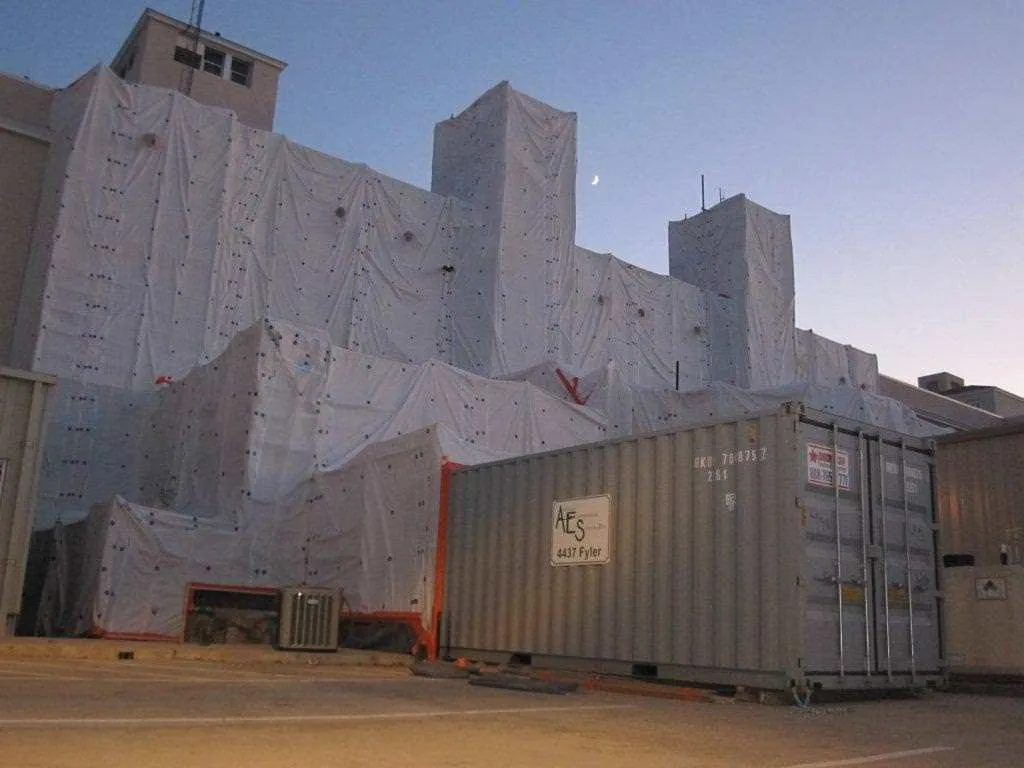
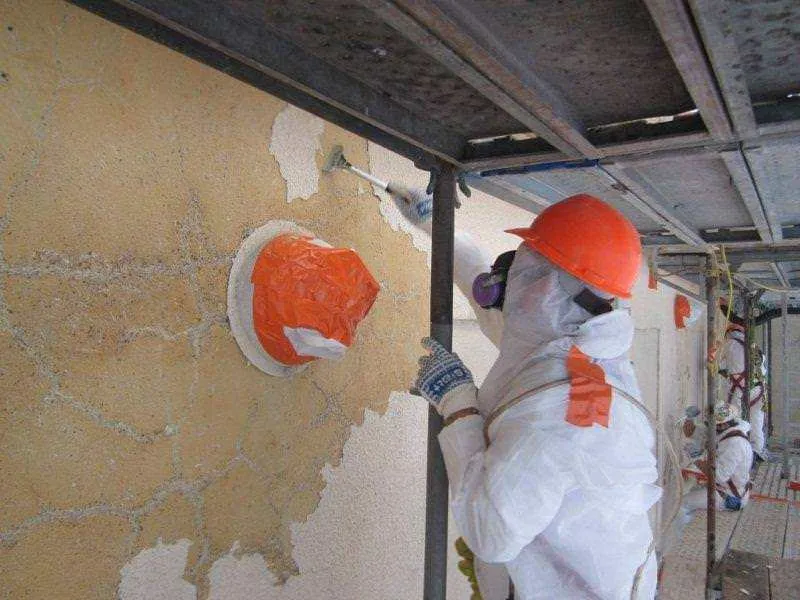
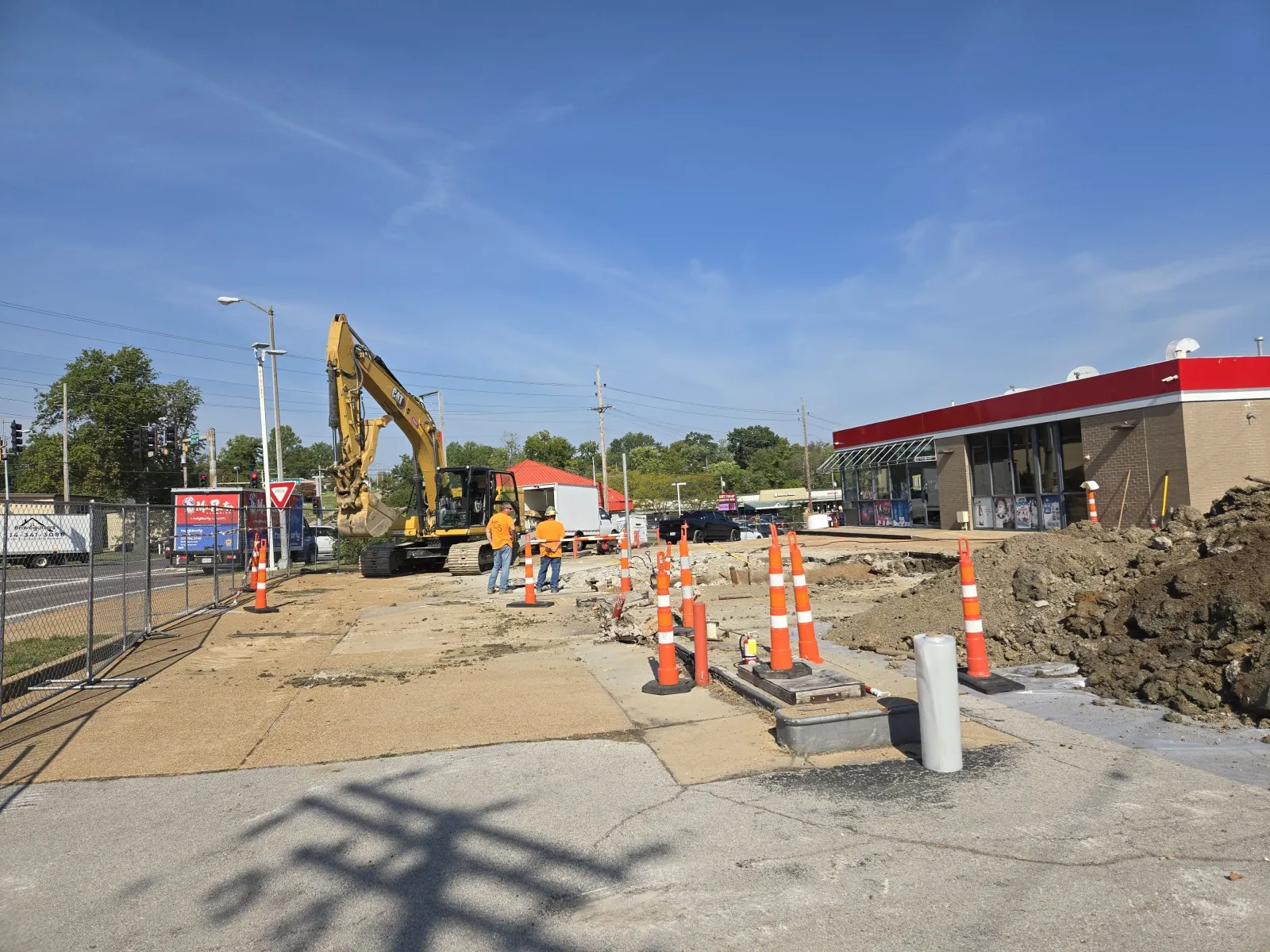
MBE firms work in every trade, including environmental work. In this field, that covers asbestos abatement, lead abatement, mold remediation, demolition, concrete work and waste disposal. Match the firm’s actual capabilities to the scope, not just the label.
AES gives one example from the St. Louis region. AES publishes NAICS codes for building demolition, interior gutting and stripping, demolition contracting, asbestos abatement, lead paint abatement, mold remediation and environmental remediation services. It also lists concrete finishing, epoxy flooring and moisture barrier installation among its services, and these appear on its capabilities statement.
The public-work pieces to check on any environmental sub:
- State registration for asbestos work (DNR lists registered contractors)
- Safety record and regulatory history
- Bonding and insurance requirements for the project
- Union status if your project requires it
- Experience with certified payroll and compliance paperwork
AES says it is well versed in the requirements of certified payroll and compliance, and that it is a Union Signatory Contractor affiliated with the Laborers’ International Union of America Local 110 and Local 42 and the International Union of Operating Engineers Local 513. See the AES MBE and government contractor page.
Relevant AES services for public owners: asbestos abatement, demolition, lead abatement, mold remediation, concrete polishing and tank removal. For demolition projects, see demolition, from survey to debris.
What should an owner ask an MBE environmental subcontractor?
Ask the same questions you would ask any environmental sub, plus the MBE checks above. Environmental work carries state credentials, safety records and waste rules that a general trade does not. The right answers protect the owner, the prime and the schedule.
Start with the work itself:
- Asbestos. Does the firm hold a Missouri DNR asbestos contractor registration, and are its supervisors and workers certified? Ask who writes the survey and who files the notices. See the glossary entries for asbestos survey and NESHAP.
- Lead and mold. Ask which licenses and procedures apply to the work. See lead abatement and mold remediation in the glossary.
- Waste. Ask how hazardous and regulated waste leaves the site and where it goes. See hazardous waste.
- Scope control. Ask what the firm will self-perform. A sub that hands most of the work to another firm may not count the way you expect.
- Records. Ask for sample payroll and compliance forms, especially on prevailing wage jobs.
Then match the answers to the contract. If a question has no clear answer, ask the owner’s procurement office before you sign.
What mistakes do primes and owners make with MBE subcontractors?
The most common mistakes are assuming a goal that does not apply, listing a firm that is not certified, and giving an MBE a scope it cannot perform. Each one can cost a bid or trigger a compliance problem.
Avoid these:
- Using the wrong goal. Read the solicitation. Do not copy a number from a different owner.
- Skipping verification. Check the directory and the certificate before you list a firm.
- Assigning the wrong scope. Match NAICS codes and registrations to the work.
- Ignoring the annual update. An expired or lapsed status can disqualify a firm from counting.
- Waiting to build the paperwork. Plan payment tracking and reports before the notice to proceed.
- Treating the MBE as a pass-through. The firm must perform real work.
Early talks with the owner and the subcontractor prevent most of these. Put the goal, the scope, the payment terms and the reporting duties in writing before the contract is signed, and review them again at each milestone. A short call each month between the prime, the MBE and the owner’s contact catches problems while they are still small.
Next step
If you are a prime or public owner looking for an MBE environmental contractor in the St. Louis region, review the AES MBE and government contractor page. Then call (314) 865-2662 or send the quote form at /contact. Ask for the capabilities statement and current certificate.
Frequently asked questions
What is an MBE in Missouri?
A Minority Business Enterprise is a business at least 51% owned and controlled by one or more minority persons. Missouri's OEO defines racial minorities for this program as individuals who are Black, American Indian, Hispanic, Asian American and other similar groups. It also includes Alaskan Natives, Pacific Islanders and Aleuts.
Does an MBE have to be certified to bid on state work?
No. OEO says MBE status does not preclude a firm from bidding on state contracts or bidding with prime contractors for subcontracts, and that certification is not necessary to do business with the state. Certification gives greater opportunity to bid on state contracts, and it is what counts in the directory.
Where do I verify that a contractor is certified?
Use OEO's Directory of Certified M/WBE Vendors on the state site. OEO says both contractors and state agencies use it to find certified minority and female participation for ongoing projects. Also ask the contractor for a current certificate and check its status and scope.
Does Missouri certification cover all agencies?
OEO says the certification covers all state agencies except the Missouri Department of Transportation, which participates in the federal Disadvantaged Business Enterprise program. Counties, cities, school districts and universities set their own rules, so read each solicitation.
How is MBE participation tracked on a contract?
OEO says prime contractors must submit payment verification forms to the Division of Purchasing as the contract requires. The state posts the MBE-WBE-BSW Participation Report for each contract. Compliance is monitored by the Office of Administration through the Division of Purchasing.
Is AES an MBE contractor?
AES describes itself as a Minority Business Enterprise (MBE) and a Native American company, and publishes its certificate and capabilities statement. See the AES MBE and government contractor page for its NAICS codes, registrations, union affiliations and past clients.
Terms on this page
Sources
- Missouri Office of Equal Opportunity: M/WBE FAQs
- Missouri Office of Equal Opportunity: M/WBE FAQs
- Missouri Office of Equal Opportunity: M/WBE FAQs
- Missouri Office of Equal Opportunity: M/WBE FAQs
- Missouri Office of Equal Opportunity: M/WBE FAQs
- Missouri Office of Equal Opportunity: M/WBE FAQs
- Missouri State University Planning, Design & Construction: MBE/WBE/SDVE Participation
Written by Advanced Environmental Services and checked against the sources above on October 30, 2026. Rules change, so check the linked page before you act.