What is the difference between polished concrete and epoxy?
Polished concrete is the slab itself, ground and refined until it shines. Epoxy is a resin coating applied over the slab. One changes the concrete’s surface, and the other adds a layer on top of it. That one difference drives most of the trade-offs below.
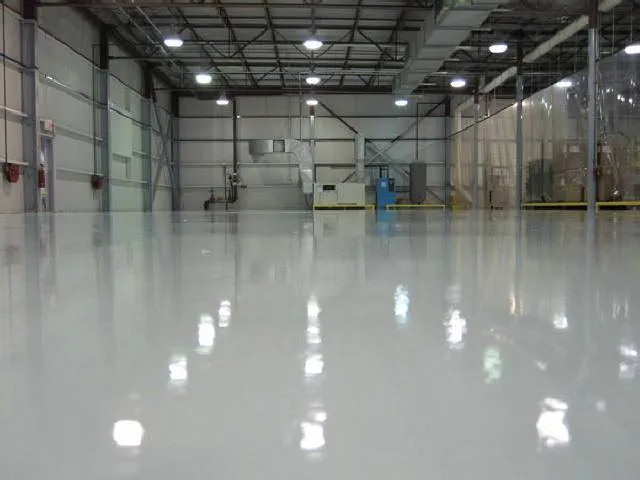
AES describes its polishing process this way: diamond-impregnated discs, each stage finer than the last, with the finest grit used to make the surface shiny. The result is a smooth, high-gloss floor. See polished concrete, grit and concrete grinding for plain definitions. AES’s concrete polishing page covers the service.
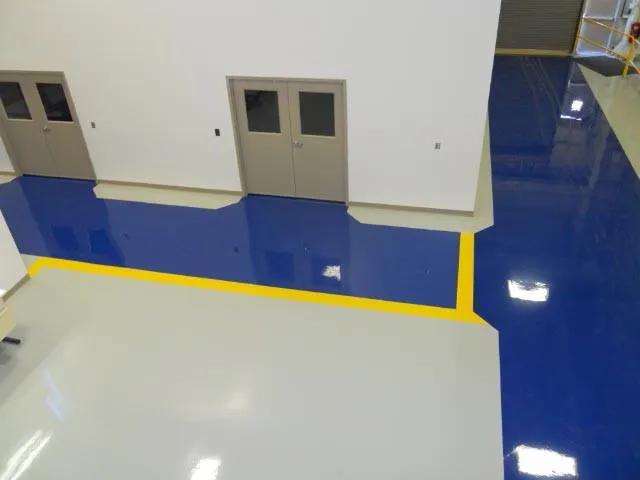
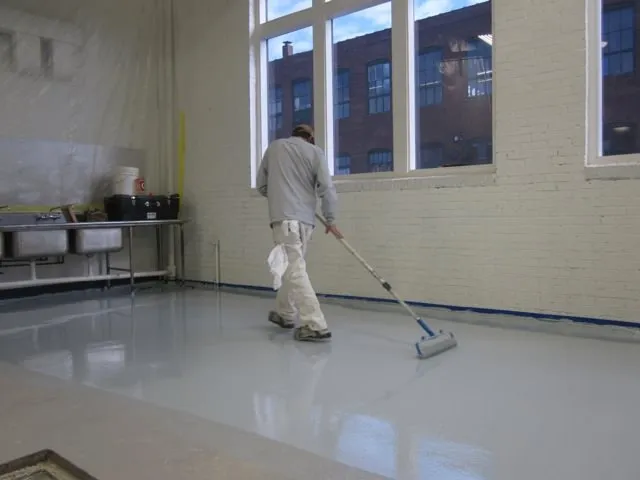
AES’s epoxy is a self-leveling floor coating. The epoxy floor coating forms a joint-free, nonporous skin. Read more on the epoxy floor coatings page.
How do polished concrete and epoxy compare side by side?
Polished concrete wins on low upkeep and no coating to wear through. Epoxy wins on chemical resistance and a nonporous surface. The table uses only what AES publishes on each system, so treat it as a starting point and confirm on site.
| Factor | Polished concrete | Epoxy floor coating |
|---|---|---|
| What it is | The slab, ground and polished | A coating over the slab |
| Look | High-gloss, can be stained for color | High-gloss, hard-wearing, joint-free |
| Upkeep | Damp cloth or mop | Wipes free of dust or debris |
| Chemicals | Seal the floor to protect it from staining | AES calls it chemically resistant |
| Surface | Dense concrete, stays concrete | Nonporous, seam-free |
| Lifespan (AES statements) | Heavy-traffic floors may need refinishing every 5 to 10 years | “A single, affordable application will last for years” |
| Common uses | Showrooms, hospitals, schools, warehouses, garages | Plants, labs, food and pharma, warehouses |
| Price | Quoted per job | Quoted per job |
AES says polishing will not make the surface slippery, and that its epoxy is impact, slip and fire resistant. Ask about slip ratings for wet areas in either case.
Which one should I choose for my building?
Choose by how the floor is used, not by looks alone. If the floor sees forklifts, foot traffic and light spills, polishing is often enough. If it sees solvents, acids, washdown or strict cleanliness rules, epoxy usually fits better.
Use this quick guide.
- Showroom, retail, school or hospital corridor. Polishing gives a clean, stone-like look. Add stain for color. See concrete staining.
- Warehouse or garage. Either works. Polishing avoids a coating; epoxy adds chemical resistance for oil and fluids.
- Manufacturing, food or pharma plant. Epoxy’s nonporous, seam-free surface cleans easily, which AES says suits food preparation and pharmaceutical buildings.
- Damp slab or below-grade space. Test first. A moisture barrier may be needed before a coating.
- Worn or damaged slab. AES says an epoxy coating can be an affordable way to restore damaged floors, and polishing begins with grinding that smooths the surface.
Our concrete floor prep guide explains cracks, patches and old adhesive. Mastic or glue left from old flooring has to come up first. See floor adhesive removal and the mastic entry.
What about moisture, cracks and old flooring?
Moisture is the most common reason a floor fails, so test before you commit. AES offers calcium chloride testing and relative humidity testing to measure vapor transmission through a slab. The result tells you whether a moisture barrier is needed and whether the application will succeed.
AES’s liquid moisture barrier is a 2-component epoxy product applied over concrete under many floor coverings. AES says it treats 25 lb. MVER concrete at 100% humidity and offers a manufacturer’s 10 year guarantee. It also says the barrier can go over dry or damp surfaces. See moisture barriers.
Old tile, glue or paint also changes the plan. If old flooring is involved, test it for asbestos before grinding. AES notes that many building products made up to the 1970s and used into the mid 1980s contain asbestos, including floor tile and adhesives. AES offers asbestos testing and asbestos floor tile removal, and our post are old asbestos floor tiles dangerous explains why.
Can AES do both systems?
Yes. AES installs epoxy floor coatings and provides concrete grinding, polishing, staining and sealing for commercial, industrial and residential buildings. The mix matters when one building needs both, such as a polished lobby and an epoxy production floor.
AES lists these related pages.
- Concrete polishing and commercial concrete polishing.
- Industrial concrete polishing.
- Concrete grinding contractors.
- Concrete sealing and concrete staining.
- Epoxy floor coatings.
How long polishing lasts is a common follow-up. Read how long does polished concrete last. The concrete finishing FAQs answer more basics.
What mistakes should I avoid when choosing a floor?
Most floor problems start before the first grinder runs. Avoid these five mistakes, and ask each bidder how they handle them.
- Skipping the moisture test. Moisture under a coating is the classic failure. Test the slab first.
- Ignoring old flooring. Glue, mastic and tile left from earlier floors have to come up, and they may contain asbestos.
- Choosing by look alone. A showroom shine and a chemical plant need different surfaces.
- Comparing totals, not scope. One bid may include grinding and patching; another may not.
- Forgetting upkeep. Polished floors need a damp mop. Heavy-traffic polished floors may need refinishing every five to ten years.
| Question to ask a bidder | Why it matters |
|---|---|
| How will you test the slab for moisture? | Moisture drives coating failures |
| What prep is in the price? | Grinding, patching and adhesive removal change the total |
| What traffic or chemicals does this system handle? | Matches the floor to the work |
| How long is the downtime? | AES says refinishing polished floors causes very little downtime |
| What is the maintenance plan? | Sets real cost over the years |
Next step
Call (314) 865-2662 or use the quote form at /contact. Tell us the floor size, use and age, and we will quote polished concrete, epoxy or both. Start with the concrete polishing page.
Frequently asked questions
Is polished concrete or epoxy better?
Neither wins everywhere. Polished concrete suits dry, high-traffic floors where you want a durable shine with little upkeep. Epoxy suits floors that face chemicals, washdowns or strict cleanliness rules. Tell us how the floor is used, and a site visit settles it.
Which is cheaper, polished concrete or epoxy?
It depends on slab condition, size and prep. AES does not publish prices for either system and quotes each job. Ask for both options on the same square footage and compare the prep scope line by line, not just the total.
Can I switch from one system to the other later?
Ask before you start. AES does not publish switching rules, and prep depends on the slab. If you may want a coating later, tell the estimator now so the plan and the order of work fit both. A site visit settles it.
How long does polished concrete last compared with epoxy?
AES says heavy-traffic polished floors may need refinishing every five to ten years, and the work is quick with little downtime. AES says a single epoxy application lasts for years. Real life depends on traffic, chemicals and prep.
Do I need a moisture barrier?
Test first. AES offers calcium chloride and relative humidity tests that measure vapor transmission, then decides whether a moisture barrier is needed. Moisture matters most under coatings and under floor coverings, so test before you pick a system.
Terms on this page
Sources
- Advanced Environmental Services: Concrete Polishing
- Advanced Environmental Services: Concrete Polishing (upkeep)
- Advanced Environmental Services: Concrete Finishing FAQs
- Advanced Environmental Services: Epoxy Floor Coatings
- Advanced Environmental Services: Epoxy Floor Coatings (nonporous)
- Advanced Environmental Services: Concrete Finishing FAQs (sealing)
- Advanced Environmental Services: Concrete Polishing (slip)
- Advanced Environmental Services: Epoxy Floor Coatings (safety)
- Advanced Environmental Services: Epoxy Floor Coatings (damaged floors)
- Advanced Environmental Services: Asbestos Remediation (older products)
- Advanced Environmental Services: Moisture Barriers
Checked against the sources above on October 30, 2026. Rules and fees change, so check the linked page before you act.